
Singapore detects minor ground motions after deep Sabah earthquake

Minor ground motions were recorded by monitoring stations in Singapore during a strong earthquake off Malaysia’s Sabah state on Feb 23, and some residents reported feeling tremors. Singapore’s Meteorological Service said the readings matched what instruments have picked up during past regional earthquakes.
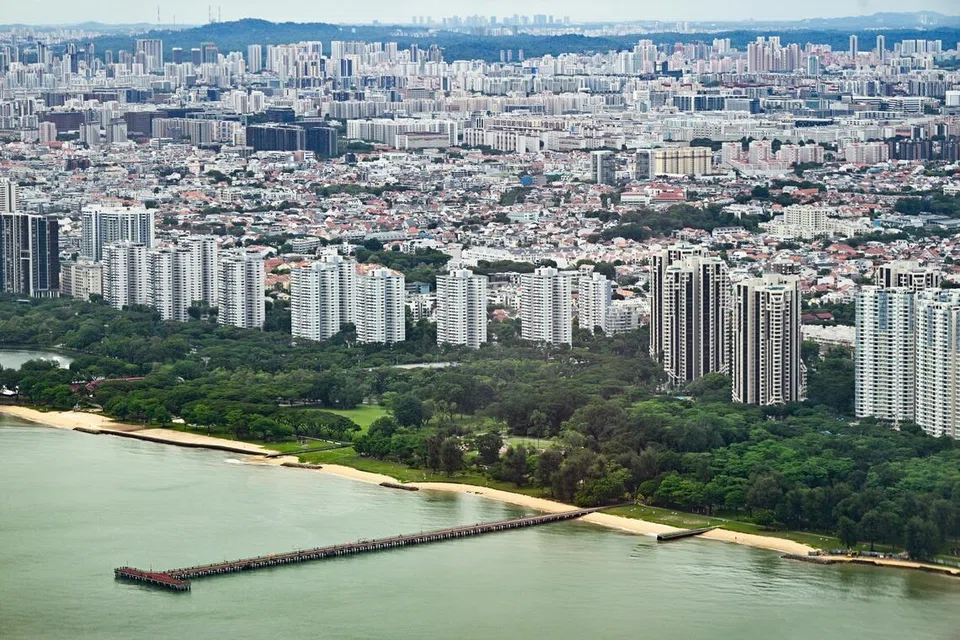
The quake occurred far from Singapore, yet people still reported a gentle swaying sensation. Netizens described feeling it in areas including Toa Payoh, Balestier and Punggol, while others posted similar accounts from Ang Mo Kio and the East Coast.
What happened off Sabah
The United States Geological Survey recorded the earthquake at magnitude 7.1 and a depth of about 620km, with the epicentre north-northwest of Kota Belud. The Malaysian Meteorological Department assessed it at magnitude 6.8. No tsunami warning was issued, and early reports did not indicate immediate damage.
Although Sabah sits about 1,500km from Singapore, the depth set this event apart. The Meteorological Service Singapore noted that deeper earthquakes can send seismic waves over long distances with less energy loss than many shallow events.
Why some people felt swaying in Singapore
Experts said residents could feel swaying because the quake released a large amount of energy. Associate Professor Tong Ping of Nanyang Technological University explained that low-frequency surface waves can travel thousands of kilometres with relatively weak attenuation. Low-frequency waves have longer periods, so they can feel like a slow sway rather than a sharp shake.
Prof Tong, who is also a principal investigator at the Earth Observatory of Singapore, said that by the time the waves reached Singapore, ground motion remained small but could still be noticeable on higher floors. Assistant Professor Aron Meltzner, also from NTU’s Earth Observatory, said the swaying descriptions fit a distant large quake and do not point to a separate local event near Singapore.
Deep-focus earthquakes in simple terms
Prof Meltzner described the Sabah event as a deep-focus earthquake, which means it originated hundreds of kilometres below the Earth’s surface. Because the waves must travel upward over a long path, deep quakes often cause less intense shaking directly above the epicentre. However, seismic waves move efficiently through the deep interior, so the same event can be felt much farther away than a shallow quake of similar size.
Singapore has experienced tremors before from major earthquakes along the Sunda megathrust and the Great Sumatran Fault. A megathrust is a very large fault where one tectonic plate slides under another, and it can generate powerful earthquakes.
Budget 2026 Singapore and what the tremors mean for safety
Specialists stressed that Singapore is unlikely to face strong earthquakes, but preparedness still matters. National University of Singapore senior lecturer Muhammad Nawaz advised simple steps such as securing heavy furniture, identifying safer spots at home and making an emergency plan.
Singapore’s Building and Construction Authority has also said buildings here are designed to withstand lateral forces, including tremors from distant earthquakes, and it publishes public guidance on what to do during earth tremors.
The Feb 23 event showed how a deep quake in the region can register in Singapore’s monitoring network and be felt by residents, even when the epicentre lies far away. For agencies and the public alike, the episode offered a reminder that distant seismic events can still produce noticeable motion, especially in high-rise living environments.