

Southeast Asia AI spending rises, but most firms see little profit impact, report finds

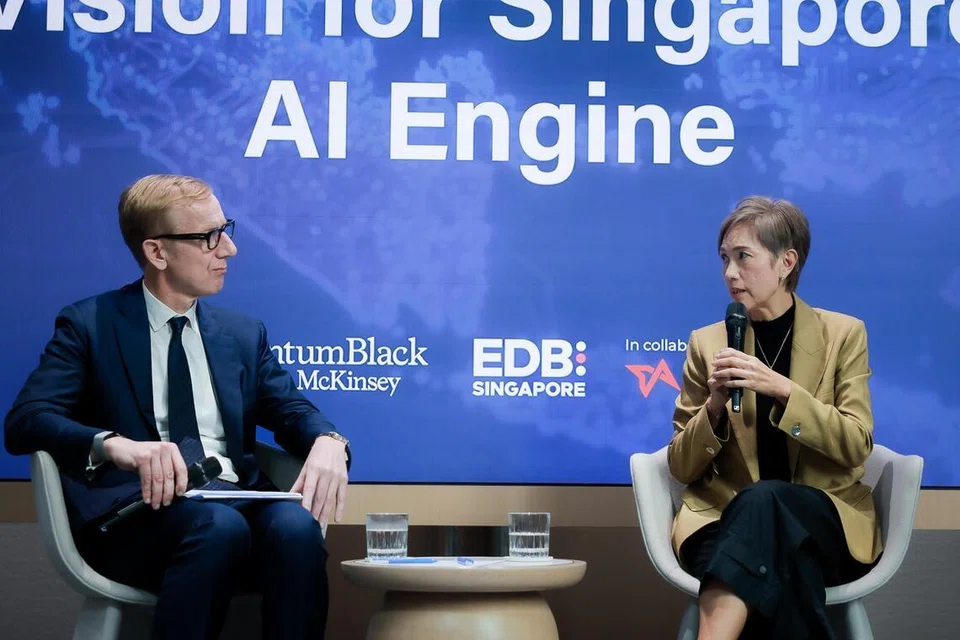
Most companies in South-east Asia that have invested in artificial intelligence (AI) are struggling to translate adoption into measurable financial gains, even as many commit a significant share of their technology budgets to AI initiatives, according to a new regional report released on Feb 11.
The findings come from “AI in Southeast Asia: An Era of Opportunity”, produced by McKinsey & Company, Singapore’s Economic Development Board (EDB) and Tech in Asia, based on interviews with executives from 330 companies across Indonesia, the Philippines, Singapore, Thailand and Malaysia.
Southeast Asia AI budgets grow, but returns remain modest
The survey, conducted between July and August 2025, found that more than three in five companies allocated between 11 per cent and 40 per cent of their technology budgets to AI initiatives.
Yet 18 per cent of respondents reported no discernible earnings impact, while more than three in five said AI contributed less than 5 per cent of total operating profit.
Why firms struggle to turn AI pilots into profits
At the report launch in Singapore, McKinsey partner Vivek Lath said underwhelming results may reflect companies prioritising the wrong applications or investing in initiatives that do not reshape end-to-end work processes.
He also pointed to employee adoption as a factor, noting that isolated AI trials — such as basic chatbots or searchable internal repositories — may deliver limited value if they are not integrated into core workflows designed around specific business outcomes.
EDB’s summary of the findings similarly highlighted uncertainty around returns as a key barrier to scaling AI, alongside technical and organisational challenges involved in integrating AI into existing systems.
Talent shortages remain a major barrier to scaling
The report’s launch also highlighted persistent talent constraints in the region. EDB said survey data showed one in five executives identified talent as the single biggest challenge in scaling AI and delivering measurable impact.
Singapore’s Minister for Digital Development and Information Josephine Teo said at the event that Singapore’s approach to defining and building AI talent is evolving as the technology ecosystem becomes more complex, and signalled changes that were set to be announced at Budget 2026.
The report’s authors said the gap between rising AI investment and limited bottom-line impact underscores the need for stronger foundations — including talent, data readiness and integration capabilities — if companies are to move beyond pilots and capture broader enterprise value from AI adoption.