

US critical minerals bloc proposal draws early interest from Japan, EU and Mexico

The Trump administration’s proposal to create a new critical minerals trading bloc with allies and partners is beginning to take shape after initial discussions in Washington, with Japan, the European Union and Mexico signalling interest in exploring a framework that could include coordinated price floors and preferential trade treatment for key raw materials.
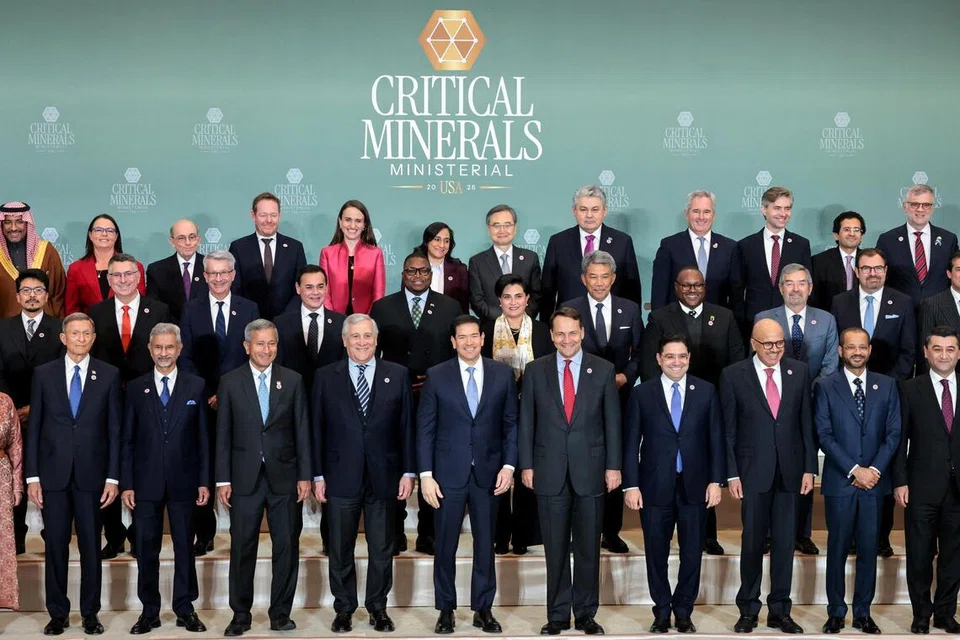
The proposal was presented at a Critical Minerals Ministerial meeting hosted in Washington on Feb. 4 by U.S. Secretary of State Marco Rubio, as the United States seeks to strengthen supply chains for minerals used in advanced technology, defence production and energy infrastructure.
U.S. officials did not name China in public remarks at the meeting, but framed the plan as a way to reduce vulnerability to market concentration and to discourage practices that undercut investment in new mines and processing capacity.
Critical minerals bloc and price floors under discussion
According to the U.S. proposal, participating countries would work toward coordinated approaches designed to stabilise markets for critical minerals through mechanisms such as price floors. The stated aim is to prevent market manipulation and discourage sudden price collapses that can make mining and refining projects uneconomic outside dominant supplier countries.
In opening remarks, Rubio described the effort as a mechanism to move the global critical minerals market toward a “healthier” balance by encouraging investment and coordination among partners, including through aligned policy tools.
The plan is being promoted as complementary to new investment in mining, processing and manufacturing, with an emphasis on building capacity among trusted partners rather than relying on concentrated supply chains.
Near-term timelines: 30-day and 60-day action plans
The U.S. Trade Representative’s office said the United States, Japan and the European Union will work toward concluding an agreement within 30 days to support and coordinate mining and processing projects and strengthen supply-chain cooperation.
In parallel, the United States and Mexico announced an action plan expected to run over the next 60 days to identify specific projects and develop coordinated policies, including consultations on price floors and how these could be incorporated into a broader, binding arrangement among multiple countries.
Officials indicated the initial steps are intended to establish a template that could expand to additional partners in the months ahead.
Singapore and supply-chain resilience
Singapore has not publicly commented on the U.S. proposal. At the ministerial meeting, Singapore’s delegation emphasised the importance of open trade and resilient supply chains, noting that minerals such as nickel and lithium are increasingly tied to economic competitiveness and national security considerations.
Wider context: dependence, leverage and investment risk
The trading-bloc concept is emerging as governments reassess how mineral supply shocks can affect industrial strategy. The United States and its partners have cited the risk that concentrated production and processing capacity can be used as leverage and can deter investment elsewhere if prices fall sharply for extended periods.
While the framework remains in early stages and most attending countries have not committed to participation, the United States is pushing for rapid follow-on work with key partners to define project pipelines, financing pathways and market rules for critical minerals.
Reuters reported the initiative had a tentative start, with contours expected to emerge over the coming months.