Ex-European Central Bank President Warns Current World Order Is “Dead”

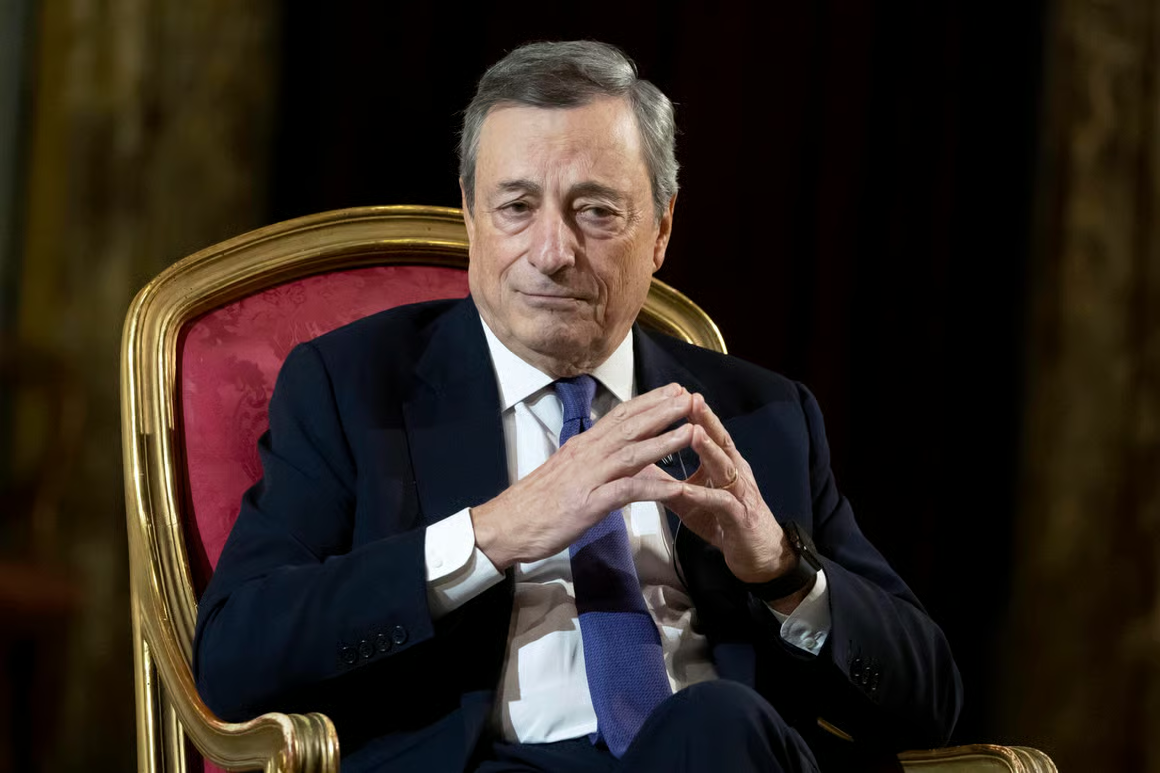
Former European Central Bank president Mario Draghi has issued a stark warning about the global system that shaped trade and security for decades. He said the current world order is “defunct” and “dead”, and he urged Europe to act fast to protect its interests.
Draghi delivered the remarks during an event at KU Leuven in Leuven. He framed the moment as a turning point for Europe’s economy and security.
World order dead and the risks shift from rules to threats
Draghi argued that a world with “less trade and weaker rules” would hurt, but it would not be the core danger. Instead, he said the bigger threat is what replaces the old model.
He pointed to rising pressure from major powers. He warned that United States policy now leans more openly on leverage, including tariffs and hard bargaining. He also said Europe cannot ignore how rivals may use supply chains and market access as tools.
Why Draghi wants Europe to tighten its ranks
Draghi’s main message focused on unity. He said Europe risks becoming “subordinated, divided and deindustrialised” if it stays fragmented. In his view, internal splits weaken Europe’s ability to respond.
He called for deeper integration on defence, industrial policy and foreign affairs. He also argued that Europe’s current setup leaves it exposed when fast decisions matter.
Trade power alone will not shield Europe
Draghi also highlighted a mismatch. Europe can act as a trade heavyweight, yet it still relies on others for security and key inputs. As a result, he warned that partners can turn that dependence into bargaining power.
He also singled out China as a strategic competitor in supply chains. He said control over critical nodes can create pressure points for other economies.
What it means beyond Europe
Draghi’s warning lands as governments rethink supply chains, energy security and technology dependence. That shift also matters in Asia, where export-led economies track changes in global rules closely.
For Singapore-based businesses, the signal is familiar. Uncertainty now shapes trade, costs and investment decisions, especially when big powers use policy tools more aggressively. Draghi’s message adds to that picture: the old playbook is fading, and the next one could prove more volatile.