

Iran attacks UAE again as Israel claims Ali Larijani was killed

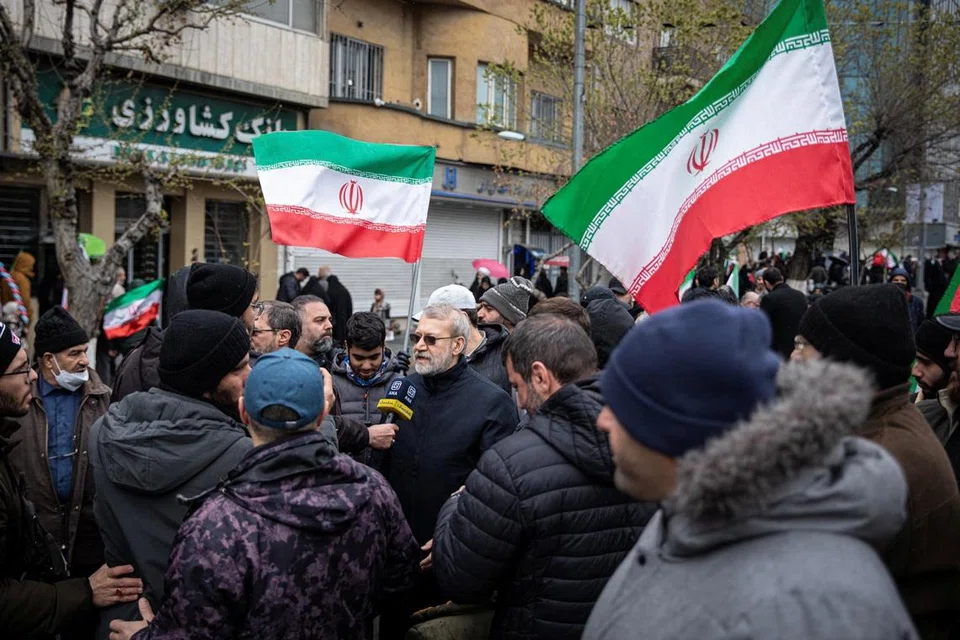
Iran launched fresh attacks on the United Arab Emirates on March 17, widening the regional fallout from its war with Israel and the United States. The strikes hit a Gulf state already under pressure from repeated disruptions to air traffic and energy infrastructure. At the same time, Israel said its air strikes had killed Iran’s national security chief Ali Larijani and Basij commander Gholamreza Soleimani, though Tehran had not confirmed Larijani’s death by Tuesday.
The latest attacks underline how quickly the conflict has spread beyond Iran and Israel. A drone struck an oil facility in Fujairah for a second straight day, while operations at the Shah gas field in Abu Dhabi remained suspended after an earlier drone attack. UAE authorities also said debris from an intercepted ballistic missile fell in Abu Dhabi’s Bani Yas area, killing one Pakistani national. The UAE briefly shut its airspace as a precaution.
Israel raises the stakes with the Larijani claim
Israeli Defence Minister Israel Katz said he had been informed that Larijani, secretary of Iran’s Supreme National Security Council, had been “eliminated” overnight along with Soleimani, who headed the Basij. The Basij is a paramilitary force tied to Iran’s Revolutionary Guards and often used to enforce internal security. Israel’s military separately said Soleimani was killed in a precise strike in Tehran.
However, Iran did not immediately confirm Larijani’s death. Reuters reported earlier on March 17 that Israeli officials were still treating his fate as uncertain. Iranian state media later published a handwritten note attributed to Larijani, adding to the uncertainty around Israel’s claim. That makes this one of the most consequential disputed battlefield announcements of the war so far.
If confirmed, Larijani would be the most senior Iranian official killed since former supreme leader Ayatollah Ali Khamenei died on the first day of the war on Feb. 28, according to Reuters. Larijani had been a former nuclear negotiator and a close figure in Iran’s power structure. His reported killing would signal that Israel is still targeting the top layers of Iran’s political and security leadership.
The Gulf is now part of the battlefield
The new UAE strikes show that Iran still retains the ability to hit targets across the Gulf despite weeks of bombardment. That matters because the UAE is both a major energy producer and a critical logistics hub. Repeated attacks on Fujairah are especially important. The port is one of the UAE’s key export gateways and one of the region’s main oil storage and bunkering centres.
The pressure is no longer limited to the UAE. Reuters reported that Iran had also launched strikes against other Gulf states, including Qatar, Saudi Arabia, Bahrain and Kuwait, after the war widened. In Iraq, rockets and at least five drones targeted the U.S. embassy in Baghdad early on March 17 in what Iraqi security sources described as the most intense assault since the conflict began. No injuries were immediately reported by U.S. officials.
These attacks are reshaping the political argument around the war. President Donald Trump said he was surprised that Iran had gone after neighbouring Gulf states. Yet Reuters also reported that U.S. intelligence assessments had warned before the war that strikes on Iran could trigger retaliation against Gulf capitals and attempts to disrupt the Strait of Hormuz.
Oil markets feel the shock
The military escalation is feeding directly into the energy market. Oil prices rose again on March 17 as traders reacted to supply fears linked to the UAE attacks and the continuing disruption in the Strait of Hormuz. Reuters reported Brent crude near $102 a barrel and U.S. crude above $94 in early trade.
That reaction reflects the importance of Hormuz. The strait is the narrow sea passage between Iran and Oman through which about a fifth of the world’s oil and liquefied natural gas trade usually moves. Reuters has reported that the waterway remains largely closed, even though some tankers have started to move through in limited numbers. The disruption has already pushed producers to cut output and raised fears of a broader inflation shock. Stagflation, a term used by economists, describes the combination of weak growth and high inflation.
The danger is now broader than crude flows alone. Attacks on Fujairah and the Shah gas field have added to concerns about refined fuels, storage, port operations and industrial supply chains. Reuters has also reported that Gulf importers are rushing to reroute cargo as the closure of Hormuz drives up costs and creates congestion at alternative ports.
Why allied support remains limited
Washington has tried to build support for naval escorts in Hormuz, but several U.S. partners have so far declined to send ships. Reuters reported that Germany, Spain, Italy, Japan and Australia had no immediate plans to join such an effort. Germany said it lacked the mandate required under its legal framework and also said it had not been consulted before the war began.
That reluctance matters because military escorts are not a simple fix. The head of the International Maritime Organization warned that naval protection cannot fully guarantee safe passage through Hormuz. He said military presence is not a sustainable answer and raised concern for vessels and crews already stranded in the Gulf.
A conflict still widening
The war is now in its third week, and Reuters has reported that at least 2,000 people have been killed. Israel said on March 17 that it was continuing to strike what it called Iranian regime infrastructure in Tehran, while also targeting Hezbollah sites in Beirut. Iran, meanwhile, has kept up missile and drone attacks, showing that it can still project force across the region even after weeks of heavy strikes.
The immediate picture remains fluid, especially around Larijani’s fate. Yet the broader direction is clearer. The conflict is no longer contained to direct exchanges between Iran and Israel. It is now hitting Gulf capitals, energy facilities, shipping lanes and diplomatic targets. That widening front is what gives the latest attacks on the UAE their significance. They are not just another round of retaliation. They are evidence that the war is becoming a regional economic and security crisis.