
Budget 2026 Singapore: MPs seek clearer guardrails for AI push

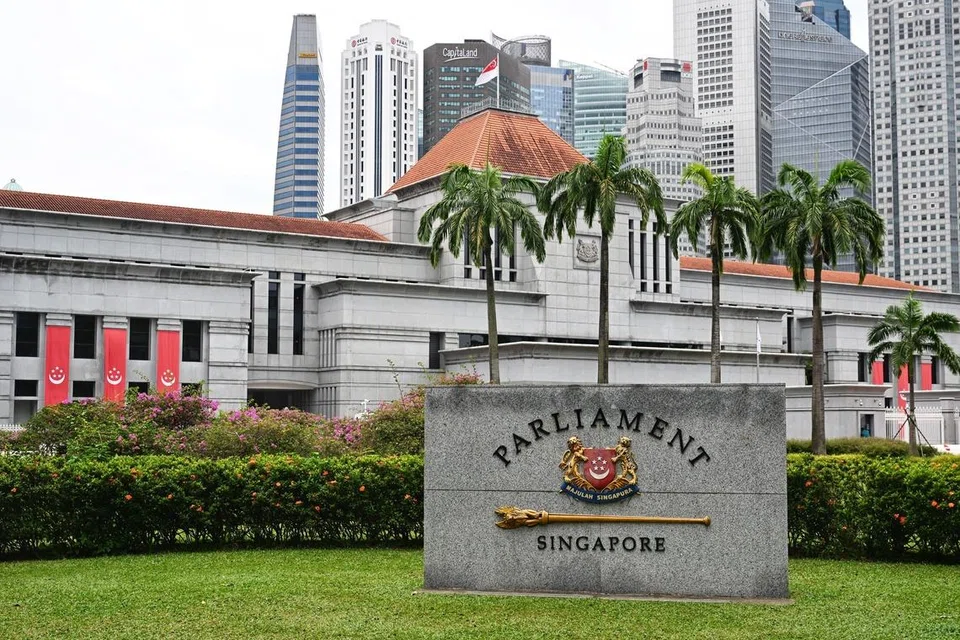
Singapore lawmakers plan to press the Government for more detail on the safeguards guiding its national drive towards artificial intelligence (AI). The questions will surface as Parliament begins debating Budget 2026 on Feb 24, following Prime Minister and Finance Minister Lawrence Wong’s Budget statement on Feb 12.
The record $154.7 billion Budget funds a broad push to tap AI, while also expanding support for businesses and lower-income families. Against that backdrop, MPs told The Straits Times they want clearer answers on ethics, cyber risk and the social impact of widespread adoption.
Why AI is now a Budget issue
AI refers to software systems that can perform tasks that normally require human intelligence, such as analysing data, generating text or spotting patterns. The Government has framed AI as a key lever for productivity and growth. However, MPs signalled they want to understand how the state will manage risks as AI spreads through public services and the wider economy.
They pointed to two linked concerns. First, ethics and accountability: how to ensure AI is used responsibly, especially in areas that affect people’s opportunities and rights. Second, inequality: how to prevent AI-driven gains from widening gaps between workers, sectors and income groups.
Training plans and ethics in schools under scrutiny
Darryl David, the MP for Ang Mo Kio GRC and chairman of the Government Parliamentary Committee (GPC) for education, said he intends to ask how the Government will train working adults, students and educators as it accelerates AI adoption.
He also plans to seek specifics on how AI will be introduced in curricula. In particular, he highlighted the need to cover ethical questions alongside technical skills. The aim, he said, is to ensure students understand not only how to use AI tools but also the responsibilities that come with them.
Cybersecurity worries rise with deeper AI adoption
Yip Hon Weng, MP for Yio Chu Kang and GPC chairman for defence and foreign affairs, said embedding AI into public and private systems could increase Singapore’s exposure to cyber threats.
He cited recent attacks attributed to the China-linked espionage group UNC3886 that targeted telecommunications firms in Singapore. In his view, if digital services underpin both the economy and AI ambitions, cyber defence must scale at the same pace.
Jobs, wages and the risk to entry-level pathways
Beyond security, MPs also flagged the labour impact. Yip described AI as the most immediate structural shift domestically. He argued the risk is not abrupt mass unemployment, but the erosion of entry-level pathways and pressure on mid-career roles as tasks become automated or redesigned.
He said a national AI push should be judged with a “human” scorecard. In practice, that means tracking not only pilots and new systems, but also how many jobs get redesigned and whether wages rise with productivity.
Surplus strength and the question of fiscal stability
Lawrence Wong said Singapore expects to end the 2025 financial year with a $15.1 billion surplus, more than twice the earlier projection of $6.4 billion. Economists later linked the gap to global economic volatility. It is the second consecutive year that the surplus came in above expectations.
Yip cautioned that volatility-driven surpluses are not permanent revenue streams. Still, he suggested the Government could consider signalling stability by avoiding further tax increases in the near term, while focusing on social mobility and targeted cost-of-living support.
How the Budget debate will unfold
The Budget debate is scheduled to run from Feb 24 to March 6. MPs will first debate the Budget statement, and the Prime Minister is expected to respond to questions later in the week.
Each sitting begins with MPs’ questions before the debate proper. According to the order paper published on Feb 23, the Feb 24 sitting will start with questions on health, support for those in professional, managerial, executive or technical (PMET) roles, and protection of critical infrastructure.
After the Budget debate, Parliament will move to debates on each ministry’s spending plans. That stage typically prompts sector-specific questions.
Space, education reforms and housing also on MPs’ lists
Several MPs, including Nominated MPs Mark Lee and Neo Kok Beng, have asked about plans to expand Singapore’s space industry. Earlier in February, the Government said it will set up the National Space Agency of Singapore (NSAS) on April 1 to develop space capabilities and seize opportunities in the expanding space economy.
Victor Lye, an MP for Ang Mo Kio GRC, asked what strategic role Singapore aims to play in the global space economy beyond domestic launch capability. He also raised questions about the talent pipeline and regional cooperation in space.
On education, David said he will ask for an update on the revamp of the Gifted Education Programme (GEP) announced in 2024. Under the changes, starting with the 2024 Primary 1 cohort, more pupils will access higher-ability programmes within primary schools, without needing to transfer to selected schools for a centralised GEP.
He also plans to ask about extending to primary schools the policy that provides personal learning devices for every student. All secondary school students already have access to such devices.
On housing, Henry Kwek, MP for Kebun Baru and a member of the GPC for national development, said the committee intends to question how to make housing more affordable and accessible for more groups. He pointed to singles, seniors, “sandwiched-class” families who earn decent incomes but face loan eligibility challenges, and households seeking greater diversity in housing types beyond standard Build-To-Order flats.
Kwek added that MPs will also look ahead to estate renewal and how the Voluntary Early Redevelopment Scheme (VERS) will be implemented fairly and clearly. He also said they will raise broader liveability issues, including building community “third spaces” and supporting a more productive built sector.
As Parliament opens debate on a record Budget, MPs are signalling that Singapore’s AI push will not be measured only by technology rollouts. They want clearer rules, stronger cyber resilience and visible gains for workers, as the Government positions the country for technological acceleration alongside a more uncertain global environment.