
Singapore passes transport law changes, mandating ERP 2 on-board units and tighter mobility scooter rules

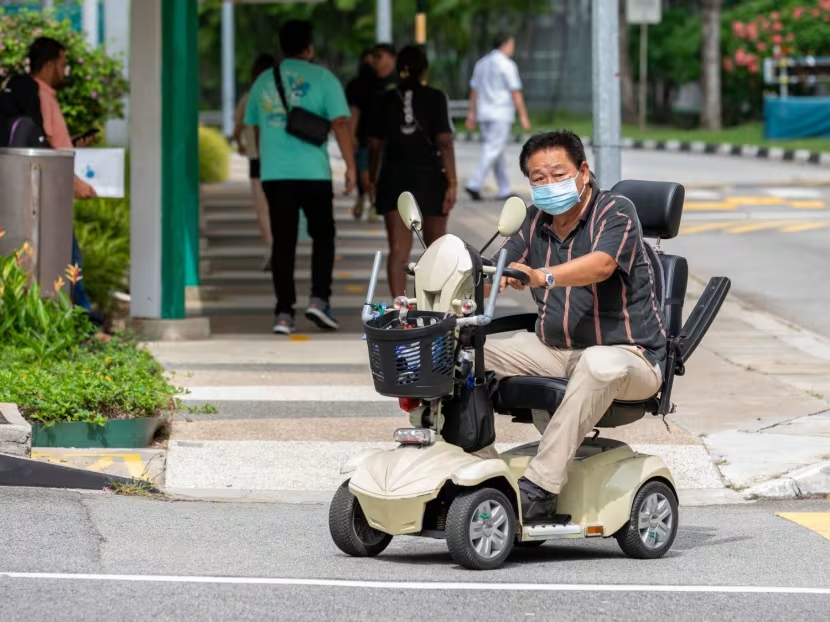
SINGAPORE — Parliament passed a raft of amendments to transport laws on Feb. 4, introducing new rules to curb the misuse of mobility scooters, strengthen pedestrian protection and pave the way for the next-generation Electronic Road Pricing (ERP) system.
The changes were passed under the Land Transport and Related Matters Bill, following two days of debate in which 24 MPs spoke.
Singapore transport laws set on-board unit requirement from 2027
Under the new laws, all Singapore-registered vehicles must be fitted with an on-board unit (OBU) from Jan. 1, 2027. The OBU is intended to support the full switch to the next-generation ERP system, which uses satellite technology to determine a vehicle’s location for toll charging instead of relying on roadside gantries.
During the debate, Acting Transport Minister Jeffrey Siow addressed questions about how the new system could support future policy options, including distance-based road pricing. He said the Transport Ministry does not intend to implement distance-based charging immediately.
Mobility scooter users to need medical certification from June 2026
From June 1, 2026, users of mobility scooters will need a Certificate of Medical Need to use the devices on public paths, under rules aimed at restricting use to those with genuine mobility needs.
Several groups will be exempt from the certification requirement, including seniors aged 70 and above.
Mandatory registration timeline for mobility scooters
The Bill also introduces mandatory registration for mobility scooters.
From June 1, 2026, new mobility scooters sold must be registered at the point of sale. Registration for existing mobility scooters will begin from mid-2027, and full enforcement starts on Jan. 1, 2029, when using an unregistered mobility scooter on public paths becomes an offence.
New offences and higher penalties
The amendments create new offences related to speed limiters and raise penalties for certain existing offences, as part of broader efforts to improve safety and curb illegal modifications.
The government said the package of measures is designed to tighten rules on road and path users while preparing Singapore for the transition to ERP 2 from 2027.