
Singapore to Launch National Space Agency as Space Investment Surges

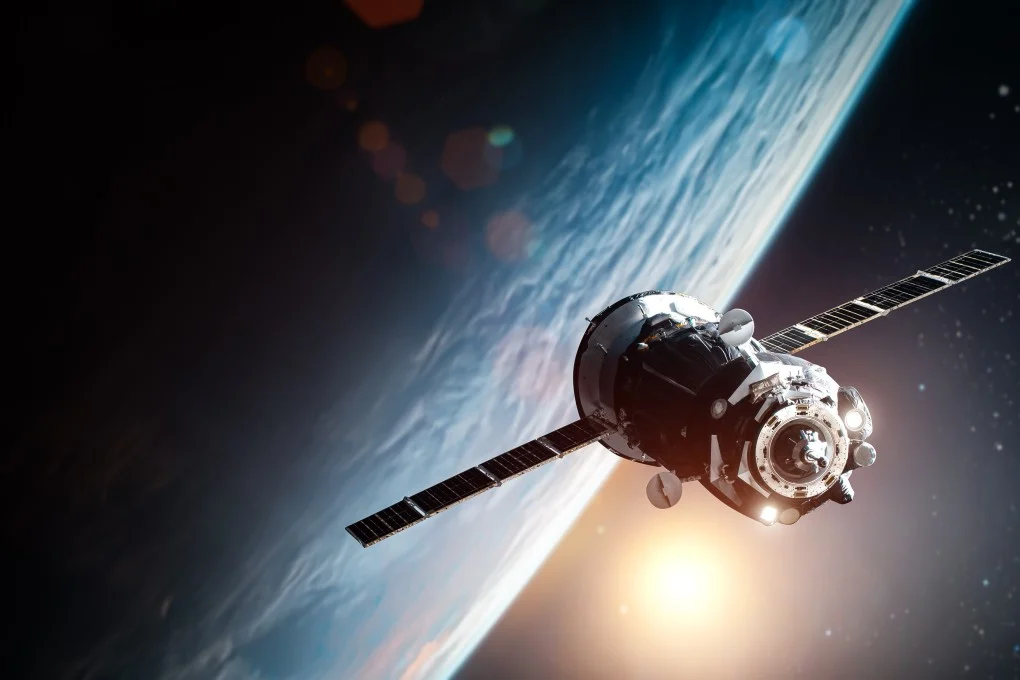
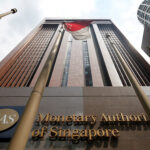
Singapore will set up a new national space agency from April 1, 2026, as governments and investors pour more money into space technology worldwide. The agency, called the National Space Agency of Singapore (NSAS), will sit under the Ministry of Trade and Industry (MTI).
The move signals a shift. Space is no longer only about exploration. It is increasingly tied to data, infrastructure, security, and economic competitiveness.
Why Singapore is making this move now
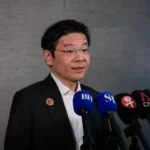
The announcement came during the inaugural Space Summit 2026, where Minister-in-charge of Energy and Science & Technology Dr Tan See Leng framed space as a backbone of modern life. Satellites already underpin communications, navigation, and Earth observation services. Earth observation is the use of satellites to monitor what happens on Earth, from weather patterns to environmental change.
Singapore’s government also pointed to a fast-expanding global market. MTI cited strong momentum in the space economy and said Singapore wants to “fully harness” new value and opportunities.
What the Singapore space agency will do
NSAS will take on two broad tasks at once. It will build capability. And it will shape the rules around a fast-growing sector.
On capabilities, NSAS is expected to develop and operate Singapore’s national space systems. That includes supporting public agencies that need satellite-based services.
On governance, NSAS will develop legislation and regulation for the space sector. The stated aim is a framework that is “pro-innovation and pro-business” while meeting high standards for safety and sustainability.
Turning satellite data into daily value
A key plank is a planned multi-agency operations centre to support government needs. It will handle satellite tasking and geospatial analytics. Satellite tasking means requesting satellite imagery of a specific location at a specific time. Geospatial analytics means extracting insights from location-based data.
Officials linked these tools to practical use cases. They include port operations, urban planning, environmental monitoring, and food security. The focus is not abstract. It is about turning space-enabled data into faster decisions on the ground.
Singapore’s location also features in the pitch. MTI highlighted interest in use cases across the Equatorial Belt, where consistent coverage and regional partnerships can drive new services.
Crowded orbits raise the stakes
More satellites also mean more risk in orbit.
Singapore says it will progressively build “space situational awareness” capabilities. The term refers to tracking objects in orbit to reduce collision risk and protect active spacecraft. This matters as congestion and debris become bigger operational issues for satellite operators.
Regulation is expected to follow the same logic. Singapore already introduced Guidelines for Singapore-Related Space Activities in 2024, covering areas such as registration of space objects and safety measures. NSAS is expected to build on that foundation through national space legislation.
A bigger bet built on existing work
Singapore is not starting from zero. MTI says NSAS will expand on the functions of the Office for Space Technology and Industry (OSTIn), which has led sector development efforts since 2013 under the Economic Development Board.
The government also underlined the country’s industrial base. It pointed to strengths in advanced manufacturing, aerospace, micro-electronics, precision engineering, and artificial intelligence as relevant building blocks for space technology.
Singapore’s space ecosystem is also growing in headcount. MTI said the country is home to about 70 space-related companies employing around 2,000 professionals across the value chain.
How much money is flowing into space
The global investment backdrop is part of the story.
According to Seraphim Space’s SpaceTech investment tracking, the sector set new records in 2025. In its index, Q4 2025 reached a new high, with US$3.8 billion invested in that quarter alone.
This surge reflects a broader shift. Space technology is attracting capital not only for launch and satellites, but also for services that sit on top of satellite networks, such as communications, mapping, and monitoring tools.
What this could mean for Singapore’s next phase
Singapore’s leadership is positioning NSAS as both an economic and strategic platform. It wants Singapore to be more than a consumer of satellite services. It wants the country to be a credible contributor to the global space ecosystem.
NSAS is also linked to funding commitments. Dr Tan said the government has set aside more than S$200 million since 2022 for space R&D projects through the Space Technology Development Programme.
Singapore also already has assets to build on. The government currently co-owns three Earth observation satellites with ST Engineering, and it has signalled interest in further developing its satellite constellation over time.
Singapore’s new agency launches at a moment when space is becoming more commercial, more crowded, and more central to national planning. NSAS is meant to bring clearer leadership, stronger capability, and tighter rules to that reality—starting April 1, 2026.