

Singapore Tightens Oversight of Islamic Religious Education Under Expanded MUIS Registration Framework

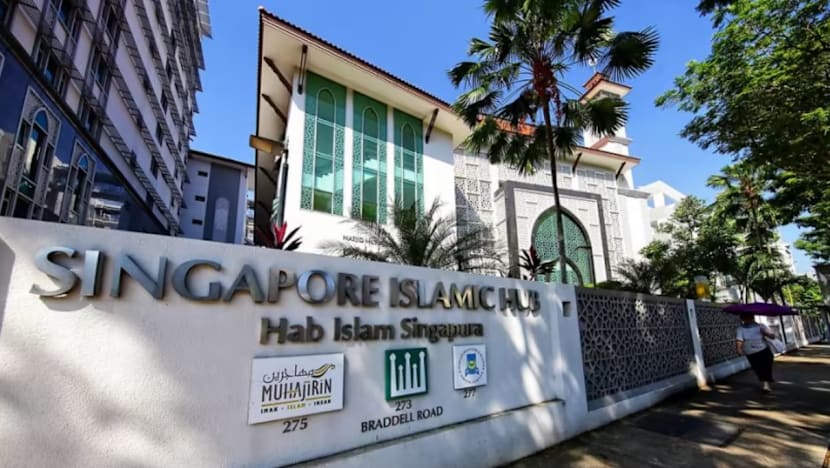
Singapore’s regulatory reach into Islamic religious education has deepened, and the implications extend well beyond administrative paperwork.
Effective October 2, any individual or organisation that provides Islamic instruction to ten or more people at least once a month must now register with the Islamic Religious Council of Singapore, known as MUIS. The expanded requirement — rooted in the Administration of Muslim Law (Amendment) Act 2024, passed by Parliament in February of that year — brings a broader sweep of providers under formal state oversight, from home-based Quranic classes to travel agencies running Umrah and Hajj preparatory courses. Approximately 50 individuals and organisations are expected to fall under the new threshold, MUIS confirmed in a media release on Saturday.
The framework applies whether instruction is conducted in person or online, and it reaches into settings that previously operated with considerable informality. Home classes that cross the ten-student mark now qualify. Online sessions hosted from within Singapore do as well, though classes conducted outside the country’s borders remain exempt. What the rules explicitly exclude are instruction provided solely to family members, casual religious sharing among friends, and services such as ruqyah or funeral rites that do not involve formal teaching.
Providers who fall under the Muslim Religious School definition but have not yet registered are granted a transition window until March 31, 2027, during which they may continue operating while preparing their applications. Registration itself opened on Saturday. Existing registered Muslim Religious Schools need not reapply and may continue under their current status.
The growth of the sector makes the regulatory response intelligible. The number of registered Muslim Religious Schools and Islamic education centres rose from 303 in 2017 to 475 in 2025 — a 57 percent increase over eight years. Over the same period, the number of religious teachers recognised under the Asatizah Recognition Scheme grew from 4,744 to 5,205. These are not trivial numbers for a community of roughly 700,000 Muslims in a city-state of under six million people. The institutional density of Islamic education in Singapore is substantial, and the state’s interest in maintaining coherence within it is longstanding.
Registered providers must ensure that all Islamic instruction is delivered exclusively by asatizah recognised under the Asatizah Recognition Scheme, and that the curricula they use have been verified by MUIS. The council’s officers will be authorised to conduct inspections, including attending classes held physically or online — a provision that signals active rather than passive oversight. This is not a light-touch licensing regime; it is a structured accountability architecture.
Alongside the registration changes, amendments to the Asatizah Recognition Scheme also took effect on October 2. New applicants seeking Tier 1 recognition — the entry-level tier for community religious teachers — must now hold at least a degree in Islamic Studies. The requirement does not apply retroactively to existing Tier 1 asatizah, including those renewing their recognition. A one-year debarment period will apply to unsuccessful applicants and those whose recognition has been cancelled or not renewed, designed to create a structured incentive for competency improvement before reapplication. Those who voluntarily withdraw because they no longer intend to teach are exempted from the debarment. MUIS will also gain greater flexibility to extend suspension periods when investigations require more time to conclude.
The timing and context of these changes are not incidental. A committee was formed last month to review safeguards for children and young people in Islamic religious settings, following a sexual assault case involving two young brothers. The offender — notably, not an accredited religious teacher — was convicted and sentenced in August, with some of the offences occurring in a mosque. The nine-member committee, announced in Parliament in September, is examining screening and oversight of those who work or volunteer with children, professional boundaries, incident reporting mechanisms, and whistleblowing arrangements. It is also looking at emerging risks tied to online religious influence and digital communications. Recommendations are expected by year-end.
Taken together, these developments reflect something more considered than a reactive tightening of rules after a scandal. Singapore’s approach to managing its Muslim minority community has always operated through a layered institutional logic — MUIS, the Majlis, the ARS, the madrasah system — in which the state maintains structural authority while granting the community meaningful space for self-governance within defined parameters. The expanded registration framework and the ARS qualification uplift are consistent with that logic: they raise the floor of accountability without dismantling the architecture of community-led religious life. The public can verify both a teacher’s ARS status and a provider’s registration through MUIS’s online directories, embedding transparency as a functional check rather than a symbolic gesture.
What the committee’s eventual recommendations will add to this picture remains to be seen. If they address systemic gaps in informal religious settings — the unregistered home class, the uncredentialed online instructor — the regulatory perimeter may tighten further. Singapore rarely legislates in isolation; the pattern here suggests that October’s changes are a consolidation, not a conclusion.



