

The Johor Bahru–Singapore RTS Link: Seventeen Years to Close a One-Kilometre Strait

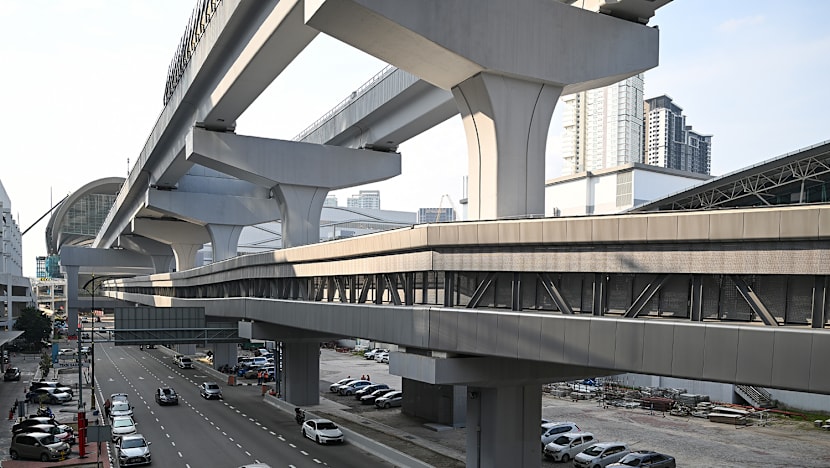
The Johor Bahru–Singapore Rapid Transit System Link, a 4-kilometre rail corridor connecting two of Southeast Asia’s most economically intertwined cities, will not carry its first paying passengers until February 2027 at the earliest. That date, confirmed by operator RTS Operations on October 2, represents yet another revision to a timeline that has slipped, stalled, and been renegotiated so many times that the project’s history now spans nearly two decades. The central argument this record demands is not one of incompetence but of structural complexity: the RTS Link has been delayed not despite bilateral seriousness but because of it — because both governments have treated it as a sovereign instrument, subject to electoral cycles, fiscal reviews, and diplomatic choreography, rather than as a piece of infrastructure to be built and opened.
The project’s origins lie in a May 2010 announcement at the annual Singapore–Malaysia Leaders’ Retreat, where then-Prime Ministers Lee Hsien Loong and Najib Razak committed to a rapid transit system linking Johor Bahru to Singapore, with a target operational date of 2018. That date was never remotely achieved, but what followed over the next six years was a methodical, if slow, process of technical and political alignment. The co-located customs, immigration and quarantine model — initially envisaged as a single facility in Singapore, then revised in 2011 to twin facilities, one at each terminus — reflected genuine diplomatic negotiation over sovereignty and commuter convenience. By 2013, the Land Transport Authority had integrated the RTS Link into its master plan, tying it to the Thomson-East Coast Line. By 2015, Woodlands North was confirmed as the Singapore terminus; by 2016, Bukit Chagar in Johor Bahru was confirmed on the Malaysian side. The groundwork was painstaking, but it was real.
The project’s most consequential interruption arrived not from engineering but from politics. Malaysia’s 2018 general election brought the Pakatan Harapan coalition to power, and the new government, confronting a fiscal position it described as alarming, initiated a review of major infrastructure commitments inherited from the Najib administration. By January 2019, Singapore’s then-Transport Minister Khaw Boon Wan was publicly acknowledging that the RTS Link was behind schedule and that milestones had been missed. A formal suspension followed in April 2019, initially for six months at Malaysia’s request, then extended — first to end-October 2019, then to April 2020, then to July 2020 — each extension negotiated carefully, with Singapore absorbing the diplomatic cost of patience while Malaysia absorbed the financial cost of delay. When the project formally resumed in July 2020, the operational target had shifted from end-2024 to end-2026, and the design itself had changed: the RTS Link would become a standalone light rail system, severed from the Thomson-East Coast Line network it was originally meant to integrate with, and a new depot would be built in Wadi Hana, Johor Bahru, rather than using the existing Mandai facility in Singapore. These were not cosmetic adjustments; they reflected a fundamental renegotiation of the project’s architecture and cost-sharing logic.
Construction, once it resumed, proceeded with relative discipline. A S$180 million contract for bridge and tunnel works was awarded in 2021. By January 2024, roughly 65 per cent of structural works across both countries had been completed, including the 17.1-metre reinforced concrete structure connecting Piers 47 and 48 above the Strait of Johor — the closest points each country has to the other. The first train was unveiled in June 2025. Operating hours were announced: first departures at 6am, last at midnight, with a minimum headway of 3.6 minutes. At the January 2025 Leaders’ Retreat, Prime Ministers Lawrence Wong and Anwar Ibrahim expressed satisfaction with progress, and in December 2025 both signed a supplementary bilateral agreement governing the co-located CIQ arrangements. Singapore passed enabling legislation in May 2026, granting Malaysian immigration officers jurisdiction at Woodlands North and Singaporean officers reciprocal authority at Bukit Chagar, with concurrent criminal jurisdiction agreed for incidents occurring on trains in transit and on the track segment between the two piers. The Woodlands North station itself was completed in September 2026, with LTA releasing images of its ticketing concourse and seamless basement connection to the existing TEL station.
What the RTS Link’s seventeen-year journey ultimately reveals is the particular friction of building shared infrastructure between two states that are simultaneously close partners and sovereign equals. Every delay has had an identifiable cause — a change of government, a fiscal review, a technical redesign — and every resumption has required fresh diplomatic investment. The February 2027 target remains conditional on independent safety certification and final regulatory approvals from both sides, which means further slippage remains structurally possible. Fares have not yet been set, with Acting Transport Minister Chee Hong Tat indicating in early 2024 that they would be determined commercially by the operator based on demand and sustainability. For the hundreds of thousands of workers, students, and families who cross the Causeway daily, the RTS Link promises a faster, more dignified crossing. Whether it delivers on that promise on schedule will depend less on engineering than on whether the institutional machinery of two governments can, for once, finish what it started without another sovereign interruption.



