

Selling Nasi Lemak at S$2 With a S$10,000 Rent: How One Yishun Family Is Making the Numbers Work

A Price Point as a Principle
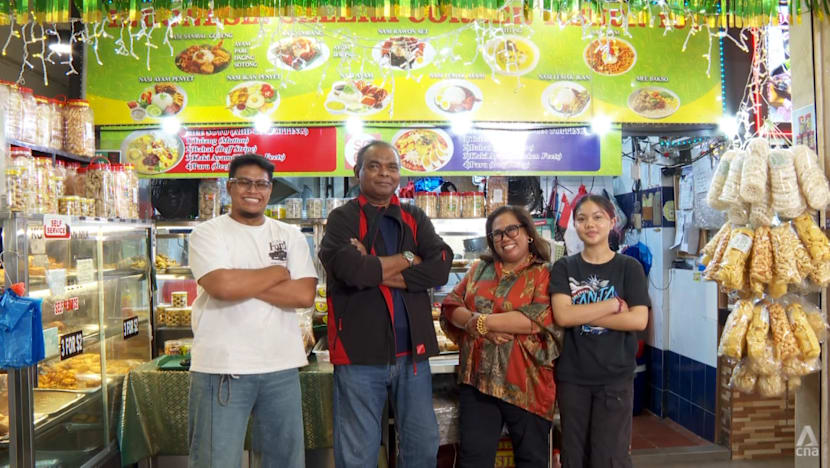
At Indonesian Selera Corner in Yishun, a packet of nasi lemak costs S$2. It has cost S$2 for more than a decade. The stall’s monthly rent alone runs to nearly S$10,000, and total fixed overheads — rent plus utilities — reach S$13,000 before a single ingredient is purchased or a single worker paid. That the price has held is not an accident of accounting. It is a deliberate act, and the tension between that act and commercial survival now falls squarely on the shoulders of a 25-year-old.
Adam Danish joined his family’s business this year as its second-generation owner. What he found when he arrived was a stall operating on instinct rather than information — revenue tracked at the top line, costs left largely unexamined, and no clear picture of which dishes were contributing to the business and which were quietly draining it.
What the Numbers Actually Show
Adam’s first task was to construct the kind of financial visibility the stall had never had. Breaking down the cost of a S$2 nasi lemak packet — rice at 30 cents, fish at 40 cents, egg at 10 cents, sambal at 20 cents, and sides such as cucumber and peanuts at 30 cents — he arrived at S$1.30 in ingredient costs alone, before any allocation of rent, utilities or labour.
That figure does not make the dish commercially viable on its own terms. But nasi lemak is not the stall’s primary revenue engine. The broader menu, anchored by nasi padang and other Indonesian-style rice dishes, generates an average spend of roughly S$7 per customer. Adam calculated that the stall needs to sell the equivalent of 159 plates daily at S$7.40 each to break even — and that figure does not yet account for family salaries.
His own remuneration reflects how tight the margins remain. For his first four months in the business, he drew nothing. His first pay cheque, issued in June, was S$1,500. His target salary of S$4,000 a month remains out of reach.
Cutting Costs Without Cutting Corners
With revenue constrained by a menu anchored to an affordable price point, the family has turned its attention to the cost side of the ledger. Sourcing fish directly from Jurong Fishery Port rather than a local market vendor reduces input costs without compromising quality — a distinction Adam’s father, known as Reban, frames as requiring “extra homework.” Consolidating trips to the port and switching to a cheaper petrol station has brought the cost of a full tank from S$220–S$230 down to S$190.
A more significant operational change is in progress. The stall currently spends S$600 to S$700 per week on cooking gas. Adam is planning a transition to electric cookers, which he estimates would reduce that expenditure by approximately half. The saving, if realised, would represent a meaningful reduction in one of the business’s more volatile cost lines.
Adam is clear-eyed about the limits of this approach. “We can’t always look at reducing costs,” he said, “because things aren’t going to get cheaper.” Cost discipline is necessary but not sufficient.
Building New Revenue Streams
The family has responded to that constraint by expanding both its menu and its geographic reach. Dishes such as nasi ambeng and nasi jenganan — Javanese-style rice sets — have been added over the years, alongside mini buffet offerings that carry higher average transaction values.
More recently, Adam and his 18-year-old sister Angel have taken the business onto TikTok Live, running daily livestreams with bundle deals and promotional offers. Angel manages the morning sessions; Adam takes over in the afternoon. Orders are placed via WhatsApp for pickup or delivery, extending the stall’s reach well beyond Yishun. After approximately two months of operation, gross revenue from the livestreams reached S$12,000 — though Adam acknowledges that individual sessions sometimes yield no orders at all.
Managing the livestream alongside incoming WhatsApp enquiries created an immediate operational bottleneck. Adam’s solution was to deploy an AI chatbot to handle order processing, at a cost of S$50 per month — compared with an estimated S$900 for a dedicated staff member. The time previously spent sorting orders before packing, which could run to 90 minutes, is now recovered and redirected toward engaging livestream viewers and driving upsells.
The Logic Behind the S$2 Packet
The nasi lemak’s price originated not from a margin calculation but from a customer request. An elderly regular asked for something smaller than the standard S$5.50 portion. Adam’s parents obliged, and the S$2 packet found its own constituency — morning-rush workers needing a fast, cheap meal, large families managing household budgets, low-income residents for whom price is a genuine constraint. The stall now moves around 200 packets a day.
For Adam’s mother, Sakdiah Abdul Latiff, the principle is straightforward: “I believe what we get we have to return to the public.” His father frames the S$2 nasi lemak in similar terms — the one thing the family can give back, and therefore the one price that does not move. The commercial challenge Adam has inherited is to build a business robust enough that his parents’ conviction does not have to become a liability. So far, the numbers suggest it is possible. Whether it remains so as costs continue to climb is a question the stall’s accounts will keep answering, one day at a time.



