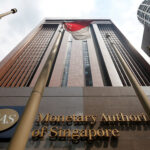

Singapore’s S$3 Billion Money Laundering Auction: How Seized Luxury Bags Fetched More Than S$1.1 Million

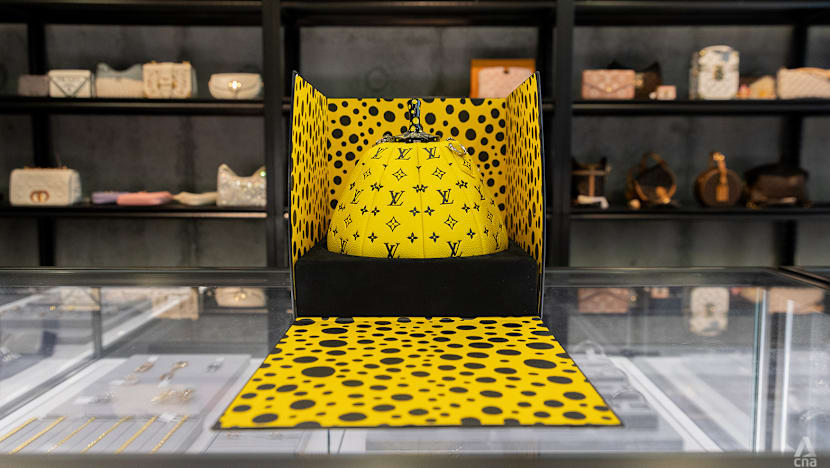
A single handbag, seized from a criminal network, sold for S$87,000. That figure — more than five times its pre-auction estimate — tells you everything about how Singapore’s largest money laundering case ended its first weekend at auction.
The Case Behind the Lots
The story begins in August 2023, when Singaporean authorities executed one of the most sweeping anti-money laundering operations in the city-state’s history. The raids targeted a transnational criminal network suspected of laundering proceeds through an elaborate web of shell companies, real estate, and conspicuous consumption. When the dust settled, police had seized assets valued at approximately S$3 billion — among them hundreds of luxury handbags, fine jewellery, watches, and high-end properties across the island.
By August of the following year, the Singapore Police Force had formally handed the seized assets to audit firm Deloitte for orderly liquidation. Deloitte, in turn, engaged Hotlotz — a Singapore-based auction house specialising in luxury goods — to conduct a series of 15 online auctions scheduled to run from September 2025 through May 2027. The proceeds, under Singapore’s asset forfeiture framework, would flow directly into the government’s consolidated fund, the central repository for state revenues and expenditure.
The first tranche comprised 337 handbags and accessories. Hotlotz listed the lots online, set conservative estimates, and opened bidding to the public.
Bidding Opens — and Quickly Accelerates
What followed was not the measured, institutional process one might expect from a government-mandated liquidation. From the moment bidding opened, certain lots attracted disproportionate attention. Chanel pieces — which constituted the largest share of bags in the auction — drew consistent interest, as did a collection of Chrome Hearts jewellery: necklaces, bracelets, and a ring that each accumulated 30 or more bids before closing.
Elaine Fung, founder of Loveholic, a firm that sources luxury items professionally, had anticipated strong demand for what she called “iconic styles” — the Chanel classic flap and the Lady Dior, silhouettes recognisable even to buyers who do not ordinarily follow luxury fashion. What she did not anticipate was the scale of the price inflation. A Chanel classic flap in caviar leather closed at S$13,000; comparable pre-owned pieces, she noted, typically sell below S$10,000 in the secondary market. A rhinestone-studded beige goatskin Chanel mini flap bag fetched S$15,000, with roughly a third of its 28 bids placed in the final hours.
“The strong interest did not surprise us,” Fung said. “The bid amounts did. The publicity and competitive atmosphere may be encouraging people to bid more aggressively.” She added that some participants may simply be unfamiliar with prevailing retail and resale benchmarks — a gap that, in a competitive bidding environment, can prove costly.
The Pumpkin Bag and the Final Hour
The auction’s centrepiece was a limited-edition Louis Vuitton x Yayoi Kusama pumpkin bag — a yellow monogram leather piece produced through a collaboration between the French luxury house and the late Japanese artist, who died at 97. Its pre-auction estimate stood at S$12,000 to S$16,000.
In the final 30 minutes before its scheduled close, 42 bids arrived in rapid succession. Hotlotz’s platform operates with an automatic extension mechanism: any bid placed within five minutes of a lot’s closing time resets the clock by a further five minutes, continuing until a full five minutes elapses without activity. The effect is a structured escalation that mirrors the tension of a live auction floor — and on Sunday evening, 20 September, it produced a closing price of S$87,000, more than five times the upper estimate.
A Chrome Hearts diamond double cross pendant necklace, estimated at S$1,000 to S$1,500, sold for S$11,000 — roughly ten times its floor. By the time the auction closed on Sunday night, all 337 lots had found buyers. The total exceeded S$1.1 million. Buyers were reminded that Hotlotz charges a 20 per cent buyer’s premium on the closing bid, inclusive of Singapore’s goods and services tax — a levy that can be waived for foreign purchasers.
A Striking Contrast with the Property Auctions
The result stood in sharp relief against the outcome of a separate auction held two days earlier, on 17 September, when seized real estate linked to the same network was put up for sale. Not a single property found a buyer. The contrast between the frenzied retail bidding and the cold silence in the property market reflects a structural reality: luxury goods offer accessible price points, emotional appeal, and immediate gratification, while high-value residential property in Singapore carries substantial transaction costs, financing constraints, and regulatory friction that deter speculative participation.
A second Hotlotz auction — covering 286 pieces of fine jewellery also seized in the case — remained open at the time of writing, with bidding set to close on 27 September. Together, the two auctions were estimated to generate between S$2.9 million and S$3.9 million. Given the trajectory of the first sale, that upper estimate may yet prove conservative.
What Comes Next
Thirteen further auctions remain on the schedule, running through May 2027. The asset classes to be liquidated have not been fully disclosed, but the scope of the original seizure — which encompassed watches, vehicles, cash, and financial instruments alongside the bags and jewellery — suggests that the series will grow considerably more complex as it progresses.
For now, the government’s consolidated fund has received its first instalment from the S$3 billion case: over S$1.1 million, extracted from a bidding public willing to pay a premium — sometimes a very steep one — for the provenance that notoriety provides.