

Hong Kong’s US$28 Billion Northern Metropolis: Ambition, Displacement and the Price of Integration

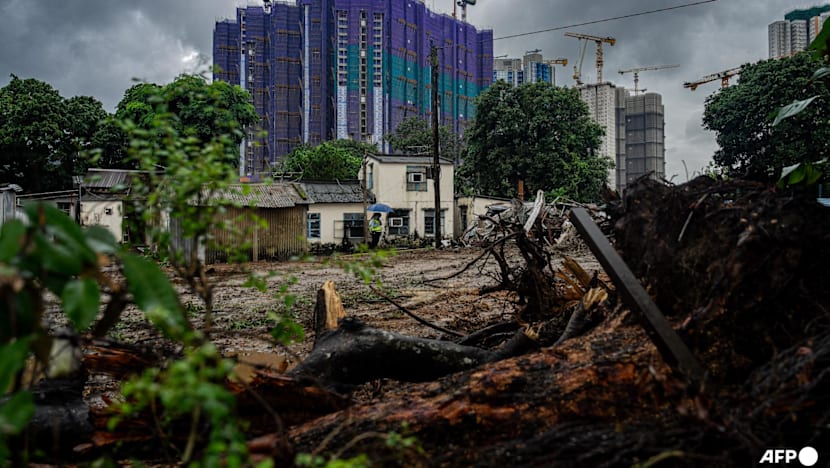
Chan Yuk-tong was packing up his yard when he said it — quietly, without drama. “I can’t bear to leave. After all, I belong here.” The 71-year-old was born in the row of small blue-brick houses behind him. He had expected to die there too. Instead, the village will be bulldozed to make way for one of the most consequential urban projects in Hong Kong’s postcolonial history.
The Northern Metropolis is vast in every sense. Covering roughly 30,000 hectares — approximately a third of Hong Kong’s total land area — it will swallow villages, natural wetlands, farmland and the quiet rhythms of rural life that have persisted in the New Territories for generations. The government’s stated ambition is to house around 2.5 million residents and generate 650,000 jobs, anchored by a Silicon Valley-style technology hub designed to deepen Hong Kong’s integration with the Greater Bay Area, the cross-border economic zone linking the city with Macau and nine mainland Chinese cities including Shenzhen and Guangzhou.
The price tag is staggering. Official estimates put the cost at HK$224 billion (approximately US$28.6 billion), though global ratings agency S&P has suggested the final figure could exceed HK$360 billion. Authorities have cited bank projections that the project will eventually account for 13 per cent of Hong Kong’s GDP over a rough 20-year horizon — a return-on-investment framing that does considerable work to pre-empt scrutiny.
That scrutiny exists, and it is substantive. Brian Wong of Liber Research Community, an NGO focused on land use, puts the concern plainly: “If you build a new city in a place that was well preserved before, it would inevitably be very destructive, no matter how you mitigate it.” Liber’s research indicates at least 25 villages will be demolished in the process. Government departments told reporters they intend to integrate rural areas into the development, though Chan’s ancestral houses were assessed as insufficiently culturally significant to warrant preservation — a determination that carries its own institutional weight.
The political context is inseparable from the economic one. Plans to integrate Hong Kong more closely with mainland China have historically drawn opposition in the former British colony, where critics argued such moves would erode the city’s constitutionally guaranteed autonomy. The National Security Law, imposed by Beijing in 2020 following large-scale protests, has substantially constrained that opposition. Steve Tsang, director of the SOAS China Institute, told AFP it “effectively put an end to the ‘one country, two systems’ framework,” adding that deeper integration with the Greater Bay Area would “logically follow.” The Northern Metropolis, announced five years ago, sits squarely within that trajectory.
Whether it can succeed on its own economic terms is a separate and more open question. Tech hubs across the border — Hangzhou, Shenzhen, cities energised by AI investment from firms like DeepSeek and Unitree Robotics — are expanding at a pace Hong Kong cannot match. Gary Ng, senior economist at Natixis, is direct: Hong Kong is “less relevant for China’s national tech ambitions” than mainland powerhouses. Yet the city retains structural advantages no mainland city can replicate — international legal frameworks, deep capital markets, university research infrastructure, and relatively open data flows. The Northern Metropolis is, in part, a bet that these advantages can be monetised at scale.
Last month, the first major land sale within the Northern Metropolis was awarded to a consortium of six companies, including Chinese state-owned enterprises and e-commerce giant JD.com, to develop housing and a logistics centre in Chan’s district. Hannah Jeong of CBRE told AFP that mainland Chinese firms seeking research bases, lower tax exposure, and access to international talent and capital will likely lead the first wave of investment. Foreign companies, she suggested, would follow incrementally as that ecosystem matures.
The institutional challenge, however, runs deeper than attracting tenants. Wilson Chan, co-founder of the Pagoda Institute think tank, identifies the core tension: maintaining efficient cross-border flow while simultaneously preserving the international community’s confidence in Hong Kong’s distinctiveness. That is not a technical problem. It is a political one, and the Northern Metropolis cannot resolve it by itself.
In another part of the affected area, Niki So watched her neighbours’ homes come down one by one, waiting for the bulldozers to reach the house where three generations of her family had lived. The 42-year-old received a public housing flat in compensation — a transaction the state considers fair. In July, she opened her gate to dozens of land department officials and police, who formally declared the site government property. She did not resist. “I hope the development here will go well, that it will thrive,” she told reporters. Then, more quietly: “If it doesn’t turn out as expected, then I think the sacrifice of this village would be quite unfortunate.” It is a sentence that deserves to be read slowly — the conditional hope of someone who has already paid the cost of a bet she was never asked to make.



