
MAS Tightens Monetary Policy for Second Consecutive Time, Defying Market Expectations

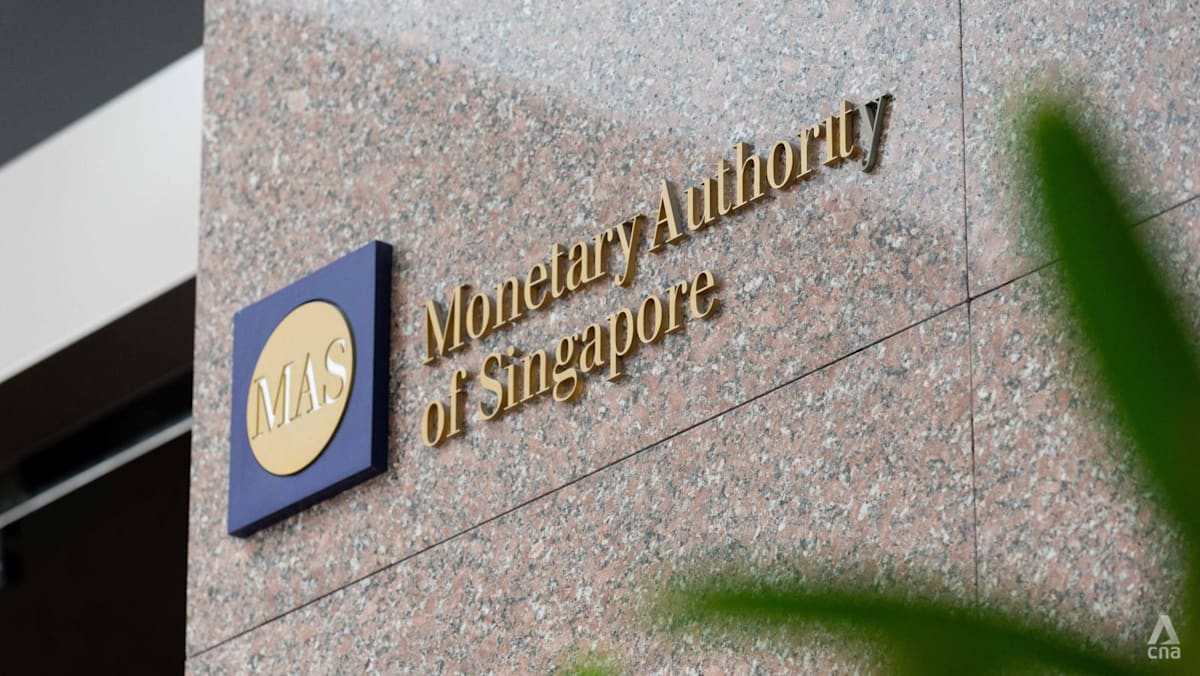
The Monetary Authority of Singapore (MAS) announced on Monday, July 27, a further tightening of its monetary policy stance, marking the second consecutive adjustment in as many scheduled reviews and confounding the majority of market analysts who had anticipated no change. The central bank said it would increase the rate of appreciation of the S$NEER policy band very slightly — a smaller increment than the move executed in April — while leaving unchanged both the width of the band and the level at which it is centred. The decision reflects the MAS’s assessment that core inflation, which excludes accommodation and private transport costs, will pick up from July and remain elevated well into early next year.
MAS manages monetary policy through the exchange rate rather than through interest rates, allowing the Singapore dollar to rise or fall against a trade-weighted basket of currencies within an undisclosed band whose slope, mid-point and width it can adjust. A steeper appreciation path strengthens the Singapore dollar, directly compressing the cost of imports and thereby acting as a brake on inflationary pressures transmitted from abroad. The April tightening had already followed a period of broad S$NEER appreciation, and the central bank judged that external price pressures would continue to pass through to consumers despite that earlier intervention. The S$NEER has since remained in the upper half of the appreciating policy band, a signal the MAS cited as evidence that the prior adjustment had been absorbed without destabilising the exchange rate.
A Reuters poll of 16 analysts conducted ahead of the announcement found that 12 expected no change to policy, while only four anticipated tightening. That distribution of expectations makes the MAS’s move a genuine surprise for markets, even as the central bank framed it as a measured, calibrated response to identifiable risks. Singapore’s economy grew 5.7 per cent in the second quarter, stronger than forecast, according to advance estimates released earlier this month by the Ministry of Trade and Industry. The output gap — the difference between actual and potential GDP — is now projected to widen slightly this year, a more expansionary reading than the April forecast, which had placed it around zero.
On the inflation outlook, the MAS kept its full-year forecast for both core and headline inflation at 1.5 to 2.5 per cent, but signalled that relief would only materialise “more discernibly” in the second half of 2027 as global energy prices gradually moderate. Imported costs are expected to rise, driven by higher fuel and electronic input prices that will lift costs for construction materials, capital equipment and food commodities. Adverse weather conditions in Singapore’s key import sources are forecast to suppress agricultural output and push food prices higher. The central bank acknowledged, however, that domestic price pressures should remain contained as sustained labour productivity growth and moderating nominal wage increases cap unit labour cost rises.
The MAS identified two principal upside risks to inflation. Fuel reserves have been drawn down significantly, and renewed supply disruptions in the Middle East could trigger sharp surges in oil prices, the policy statement warned. Robust investment growth, particularly in artificial intelligence-related capital expenditure, could also generate greater demand spillovers domestically and abroad, prolonging inflationary pressures beyond current projections. On the downside, an unexpected tightening of global financial conditions or a pullback in AI-related investment spending could undermine GDP growth momentum and weaken inflation, the central bank noted. MAS said it stands ready to curb excessive volatility in the S$NEER and will continue to closely monitor economic developments.
Analysts were divided on whether the move constituted a pre-emptive strike or a reactive adjustment. OCBC chief economist Selena Ling described it as “probably another insurance or pre-emptive move,” noting that core inflation may not subside until around mid-next year and that the US-Iran ceasefire, which had briefly compressed energy prices, has done little to resolve the broader uncertainty in the Middle East. Barnabas Gan, group chief economist at RHB Bank, echoed that framing, characterising the decision as a pre-emptive measure to anchor inflation expectations amid a widening output gap, and said RHB now expects the MAS to tighten further in 2026, with the S$NEER gradient potentially reaching 1.75 per cent by year-end. Standard Chartered economists Edward Lee and Jonathan Koh took a more cautious reading, arguing that the MAS had moved with deliberate restraint given still-elevated external uncertainty, and that the central bank is likely to remain in wait-and-see mode through October, with risks tilted toward further tightening rather than a committed path of escalation. Ms Ling captured the broader dilemma succinctly: Singapore finds itself caught between a global AI boom turbocharging its economy and persistent volatility in global energy prices, with a domestic recovery that, in her words, resembles a K-shape — certain sectors thriving, others absorbing cost pressures and sluggish demand simultaneously.