
What Sweltering European Cities Can Actually Learn From Singapore’s Approach to Cooling

Picture the scene: a Singapore office tower, mid-afternoon, the equatorial sun pressing down at 33°C outside, and inside, a colleague reaching under her desk for a cardigan. The air-conditioning has been cranked to somewhere near arctic. It is a small, familiar absurdity — and, as it turns out, an instructive one for cities thousands of kilometres away that are only now beginning to reckon with heat as a structural problem rather than a seasonal inconvenience.
When Elon Musk took to social media during a recent Northern Hemisphere heatwave to call Singapore’s founding prime minister Lee Kuan Yew a “genius” for recognising air-conditioning’s role in the city-state’s development, he was reaching for a convenient shorthand. Lee’s logic was, in its original context, straightforwardly pragmatic: in the tropics, mechanical cooling made modern administration possible, rendered offices usable, and allowed civil servants to function through humidity that would otherwise be debilitating. That history is real. But history, viewed through the lens of a sweltering European summer, can mislead as easily as it can illuminate.
The temptation now — in France, Germany, the United Kingdom, and across much of the continent — is to read Singapore’s development story as a simple instruction manual: buy more air-conditioners. The reality is considerably more complicated, and considerably more interesting.
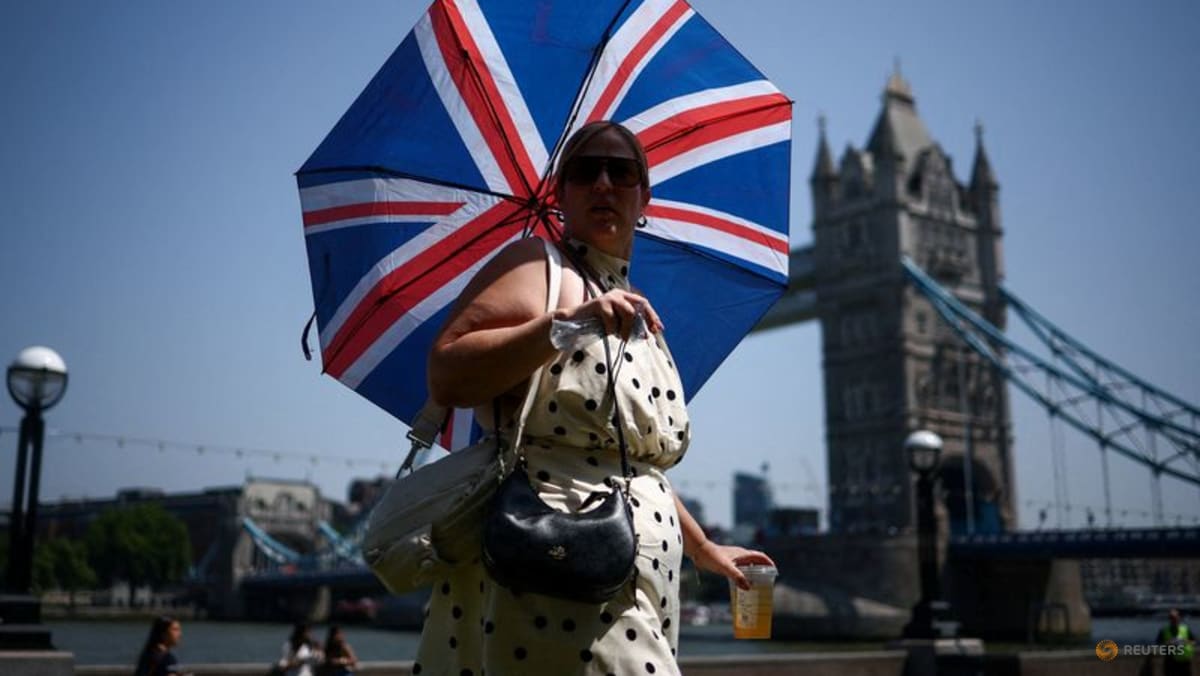
Heat, as a public health threat, is no longer speculative. The Intergovernmental Panel on Climate Change has assessed that heat extremes will grow more frequent and more intense with every increment of warming. At 2°C above pre-industrial levels, changes in extreme heat intensity would be at least double those at 1.5°C; at 3°C, quadruple. These are not distant projections. They describe a trajectory already underway, one that European cities — built for cold protection, not heat management — are structurally ill-equipped to handle.
Most of Europe’s housing stock, schools, hospitals and transport infrastructure was designed around the logic of insulation: keep warmth in during winter. That same insulation traps heat in summer. Stone, asphalt and concrete absorb solar radiation through the day and release it through the night, amplifying the urban heat island effect and denying residents the relief that rural areas might find after sunset. Rail lines buckle. Power grids strain. Care homes, designed without cooling infrastructure, become dangerous environments for elderly residents during prolonged heat events.
Mechanical cooling, then, does deserve a serious place in climate adaptation policy. It saves lives. That much is not in dispute.
But air-conditioning also raises a question that technocratic enthusiasm for the technology tends to elide: who gets cooled? The IPCC has documented what it describes as a cooling divide — wealthier households purchasing thermal safety through private units while lower-income households endure hotter homes, elevated health risks and fewer alternatives. Heat risk, in other words, is not distributed evenly. It concentrates along existing lines of economic vulnerability, and a policy framework that treats air-conditioning as the primary solution risks deepening those inequalities rather than resolving them.
This is precisely where Singapore’s experience becomes instructive — not because the city-state has perfected its approach, but because it has, over time, developed something more sophisticated than a simple reliance on mechanical cooling. Singapore’s National Heat Resilience Strategy integrates climate projections with long-term urban planning, combining precinct design optimised for airflow and ventilation with expanded green and blue spaces, cool surface materials, district cooling systems, heat advisories, public education campaigns, and targeted support for outdoor workers, the elderly and low-income households. The logic is systemic: heat risk is addressed across its full dimensions of hazard, exposure and vulnerability, rather than reduced to a single technological fix.
Research from the Cooling Singapore Initiative — a collaboration involving Singapore Management University, the National University of Singapore, Nanyang Technological University, ETH Zurich and other institutions — has argued precisely this point: that effective heat management in hot and humid cities requires what researchers call heat-smart strategies, portfolios of measures rather than singular solutions. The scale of what is at stake globally makes the argument urgent. The UN Environment Programme has projected that global cooling demand could more than triple by 2050 under a business-as-usual scenario, driving cooling-related emissions to 7.2 billion tonnes of carbon dioxide-equivalent annually. A sustainable cooling pathway — combining passive cooling measures, efficient technologies, local heat action plans and accelerated power-sector decarbonisation — could cut projected 2050 cooling emissions by up to 97 per cent. The gap between those two trajectories is, in large part, a policy choice.
For European cities, the practical implications are several, and none of them begin with purchasing a split-unit air-conditioner.
Planning must involve communities rather than simply delivering solutions to them. Heat action plans developed without meaningful input from residents, outdoor workers, schools, care providers and local businesses will consistently miss where risk actually concentrates. Mechanical cooling should be targeted, deliberately and first, at the settings where it matters most — hospitals, care homes, schools, social housing, public transport — with enforceable indoor temperature standards rather than voluntary guidance. Buildings need retrofitting before rising air-conditioning demand strains power grids beyond their capacity: external shading, reflective roofing, cross-ventilation and night cooling can meaningfully reduce indoor temperatures and electricity demand without a single compressor running. Streets and public spaces matter as much as rooms — trees, shade structures, drinking water access, cooler pavements and heat-safe public spaces are not amenities but infrastructure. And cooling must be regulated as part of the energy system: efficient appliances, low-global-warming refrigerants, district cooling networks and clean electricity are not optional refinements. Air-conditioning powered by coal-heavy grids and refrigerants with high warming potential may resolve one climate problem while compounding another.
The obvious counterargument is that European cities face intermittent summer extremes, not Singapore’s year-round humid heat, and that tropical levels of air-conditioning dependence would therefore be disproportionate. That counterargument has merit — but it is weakening. Intermittent no longer means rare. Climate change and the urban heat island effect are converting what were once exceptional heat events into recurring ones, and the infrastructure failures, health crises and excess deaths that accompany them are accumulating into a pattern that demands structural response rather than seasonal improvisation.
Temperate cities should not replicate the tropics’ excesses — the overcooled malls, the offices where the thermostat reads 19°C, the colleagues who pack a sweater in July. Climate adaptation should not require wearing a cardigan indoors. But it does require treating heat as a governance problem, a public health problem and an urban design problem simultaneously, rather than outsourcing the entire question to the market and the individual consumer.
Somewhere in a Singapore office right now, someone is pulling on that cardigan. The lesson for Europe is not to import the air-conditioner. It is to learn, before the next heatwave arrives, what it actually costs to get cooling wrong.
Winston Chow is Lee Kong Chian Professor of Urban Climate at Singapore Management University and Co-chair of the Intergovernmental Panel on Climate Change. The views expressed are his own and do not represent those of SMU or the IPCC.