

Singapore High Court Reinstates CCS Ruling Against Warehouse Operators Who Shared Pricing Plans

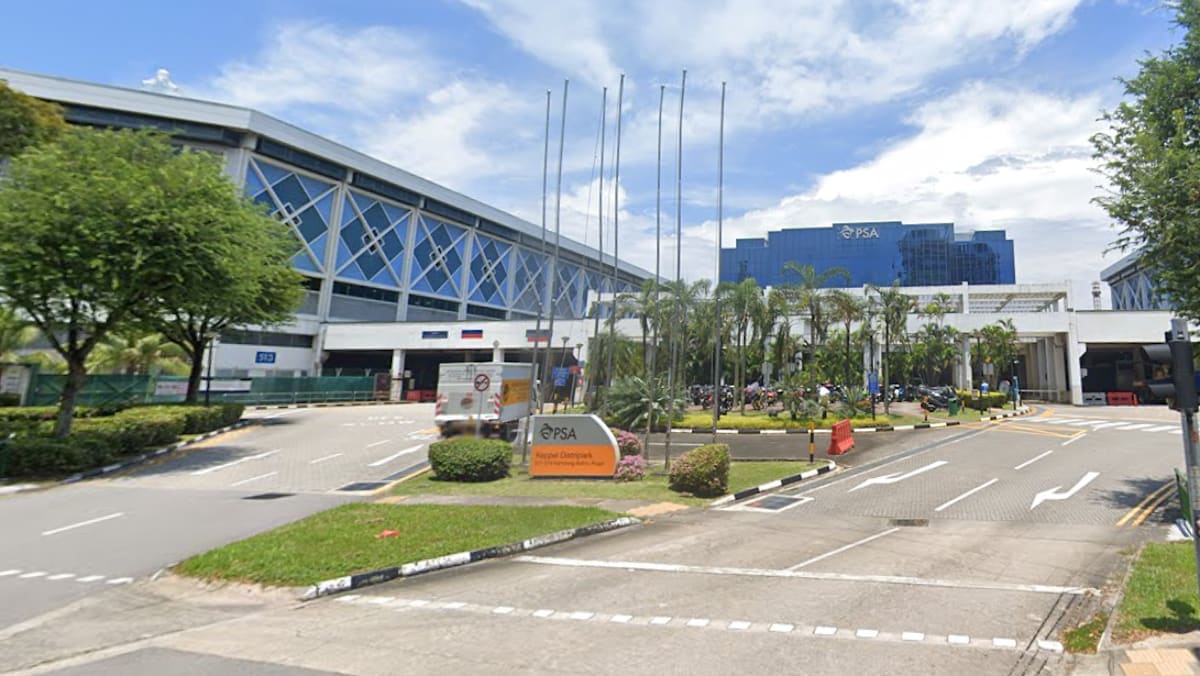
Two warehouse operators at Keppel Distripark learned a costly lesson in June: market share does not determine liability under Singapore’s competition law. The High Court’s June 30 judgment reinstating the Competition and Consumer Commission of Singapore’s (CCS) original ruling against CNL Logistic Solutions and Gilmon Transportation & Warehousing has sharpened the legal landscape for businesses of all sizes operating in the city-state.
What actually happened?
The case traces back to June 2017, when representatives from four warehouse operators at Keppel Distripark communicated about plans to introduce a free-trade zone (FTZ) surcharge — specifically, at the same rate as the largest operator in the facility. CCS investigated the conduct and, in November 2022, issued an infringement decision against all four companies. It imposed combined financial penalties of S$2.8 million (approximately US$2.1 million), finding that the information exchange breached Section 34 of the Competition Act, which prohibits agreements and concerted practices that prevent, restrict, or distort competition.
CNL and Gilmon appealed. The Competition Appeal Board sided with them in July 2024, ruling that CCS had insufficiently weighed the economic context — particularly the companies’ relatively modest shares of the warehousing market at Keppel Distripark. CCS did not accept that outcome. It appealed, and the High Court has now reversed the board’s decision entirely.
Why did the High Court disagree with the Appeal Board?
The court’s reasoning is precise and worth examining carefully. It found that CNL and Gilmon had not simply engaged in casual industry conversation. They had exchanged information about competitors’ pricing strategies and intentions, then actively used that intelligence during negotiations with customers to secure acceptance of the surcharge. The information exchange was, in the court’s framing, operationally consequential.
The companies argued that their limited market power rendered their conduct harmless to competition. The High Court rejected this directly. Small market share does not confer immunity. What mattered was whether the exchange of forward-looking pricing information gave the parties a competitive advantage they would not otherwise have had — and the court found that it did. The exchanges allowed CNL and Gilmon to overcome their individual commercial weaknesses and present a unified pricing front to customers.
This is a meaningful doctrinal clarification. Competition law in Singapore, as elsewhere, distinguishes between market effects and market structure. A firm can hold a minor slice of a market and still engage in conduct that distorts how competition functions within it.
What does “information exchange” mean in competition law terms?
Not every conversation between competitors is anti-competitive. Industry associations meet. Trade bodies publish benchmarks. Companies sometimes share data through third parties in ways regulators explicitly permit. The legal risk concentrates around a specific category: confidential, forward-looking information about prices or pricing intentions.
The distinction matters enormously in practice. Historical pricing data, publicly available market information, and aggregated industry statistics generally sit in safer territory. What regulators — and now Singapore’s High Court — treat with particular suspicion is the direct disclosure of what a firm intends to charge in the future, especially when shared with a competitor who might coordinate behaviour accordingly. In the Keppel Distripark case, the surcharge communication was precisely this kind of disclosure: specific, directional, and acted upon.
What are the practical implications for businesses?
CCS chief executive Alvin Koh was unambiguous in his post-judgment statement. Businesses must set prices independently. Employees must understand what they can and cannot share with competitors. And companies cannot rely on small market share as a shield against enforcement. The regulator has signalled that it will continue to take firm action against anti-competitive conduct.
For compliance officers and legal counsel across Singapore’s logistics, warehousing, and broader commercial sectors, the ruling reinforces a straightforward but often underappreciated principle: the risk of a competition infringement does not scale neatly with market size. A mid-tier operator, a regional distributor, a niche service provider — all face the same statutory framework as market leaders. The penalties, running into millions of dollars, are not calibrated to be inconsequential for smaller firms.
The structural lesson is institutional. CCS demonstrated here that it will pursue appeals through the High Court when it believes the Appeal Board has misapplied the law. That persistence — and the court’s willingness to reinstate the original regulatory decision — signals a competition enforcement regime that takes its own determinations seriously.
What should companies do now?
The CCS guidance following the judgment is direct: train employees, audit what information flows between your staff and competitors, and treat any discussion of future pricing with competitors as presumptively risky. This is not overcaution. It reflects the legal standard the High Court has now affirmed.
Singapore’s competition framework is, by design, one of the more rigorously enforced in Southeast Asia. The Keppel Distripark case is a reminder that regulatory sophistication here extends beyond large monopolistic actors. The rules apply in the warehouse as much as in the boardroom.