
Rajasthan’s Political Appointment Backlog: BJP Moves to Fill Over 50 Vacant Posts Ahead of Local Elections

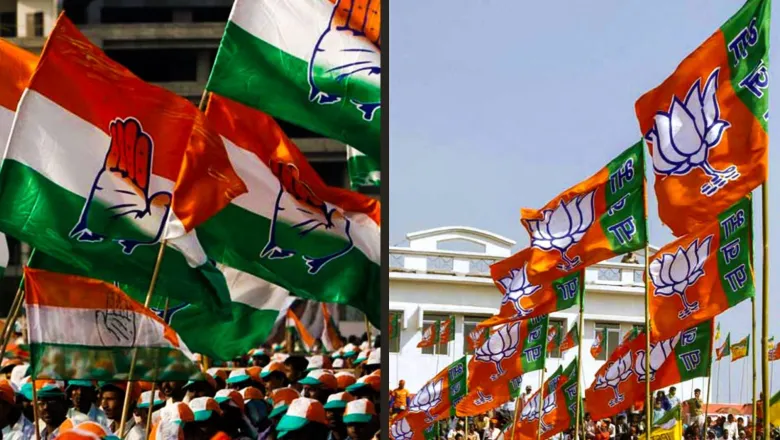
With urban local body and panchayat elections drawing closer, Rajasthan’s ruling Bharatiya Janata Party is finally moving to address a significant governance gap — more than 50 key positions left vacant across the state’s boards, corporations, commissions, academies and statutory bodies. The pace of political appointments, long stalled, is now expected to accelerate sharply in the months ahead.
Despite holding power for over two and a half years, the BJP has made only 12 major political appointments since forming the government. Those completed include posts at the Heritage Development Authority, the Farmers Commission, the Devnarayan Board, the State Finance Commission, the Human Rights Commission and the Rajasthan Board of Secondary Education — a thin record for an administration governing a state of Rajasthan’s scale and institutional complexity.
The arithmetic of what remains undone is striking. Pending vacancies span commissions for women, children, minorities, senior citizens and persons with disabilities, alongside advisory and statutory bodies tied to social welfare, rural development and public grievance redressal. Beyond the welfare architecture, appointments are also awaited in organisations connected to tourism, housing, sports, youth affairs, agriculture and cultural promotion, including Urban Improvement Trusts and the Rajasthan Housing Board.
Party insiders indicate the exercise is now gaining genuine momentum. BJP state president Madan Rathore has signalled that announcements are imminent, with approximately 25 appointments to boards, corporations and commissions expected within the next three to four months. Discussions on candidate names have already occurred at the organisational level, and a review of potential nominees is underway. Two appointments — the Chief Information Commissioner and the Chairman of the Rajasthan Public Service Commission — could be confirmed as early as this month.
The political calculus behind the timing is not incidental. Appointments of this kind serve a dual function in the BJP’s organisational logic: they reward party workers and senior leaders who have waited in the queue, and they allow the leadership to calibrate representation across Rajasthan’s diverse regions and social groups before voters go to the polls. An election cycle sharpens the incentive considerably.
What the delay itself reveals is worth noting. A two-and-a-half-year lag in filling institutional posts is not merely administrative inertia; it reflects the difficulty of managing competing factional claims within a large, internally differentiated party. The very fact that the approaching election has now unlocked the process suggests these appointments were always as much about intra-party negotiation as about governance. The bodies that will eventually be filled are not ceremonial — they carry real mandates over public welfare, regulatory oversight and developmental delivery. How the BJP resolves the tension between political reward and institutional competence in making these selections will be worth watching closely.