

Apollo Economist Finds ‘Zero Evidence’ of AI Job Losses — But Dozens of Companies Tell a Different Story

Apollo Economist Finds ‘Zero Evidence’ of AI Job Losses — But Dozens of Companies Tell a Different Story
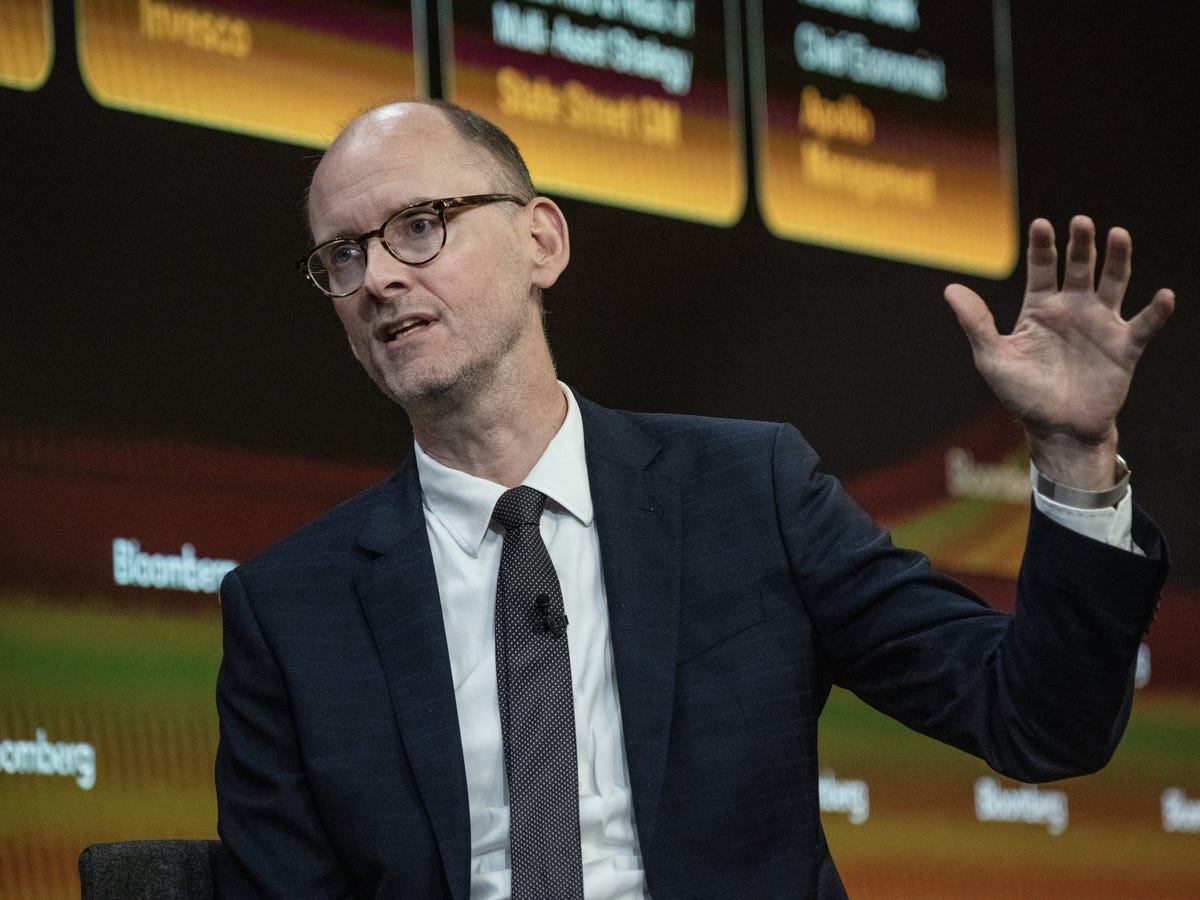
Torsten Sløk, chief economist at Apollo Global Management, published a blog post on Friday claiming there is “zero evidence of job losses because of AI” — a conclusion drawn from ADP National Employment Report data, even as major corporations continue to cite artificial intelligence as justification for significant workforce reductions.
What the Data Shows
Sløk’s analysis points to a labour market that is absorbing, rather than shedding, AI-related roles. Companies are actively recruiting candidates with AI implementation skills, while the infrastructure buildout — data centres, semiconductors, energy systems — is driving salary growth in technical fields.
“The AI spending boom is stoking both employment and inflation,” Sløk wrote, citing upward pressure on wages for AI specialists and prices for hardware and energy inputs.
The most recent ADP report supports a broadly stable labour picture: private companies added nearly 110,000 workers to payrolls in April alone.
Sløk frames this dynamic through the lens of the Jevons paradox — the economic principle holding that increased efficiency in resource use tends to expand, rather than contract, overall consumption of that resource. In this reading, cheaper AI tools increase demand for human labour rather than displacing it.
“Cheaper technology is creating more demand and more jobs,” he wrote.
Industry Voices Align — Selectively
Sløk’s position found backing from several prominent figures. Box CEO Aaron Levie, Dell CEO Michael Dell, and White House AI and Crypto Czar David Sacks all endorsed his view via posts on X over the weekend. Goldman Sachs CEO David Solomon made a comparable argument in a New York Times opinion piece last week.
An EY survey of 240 financial services CEOs found that approximately 60% believed AI investment would maintain or increase their headcount by 2026.
Nvidia CEO Jensen Huang went further, criticising companies that attribute layoffs to AI. “The narrative that connects AI to job loss for many of the CEOs that are doing it is just too lazy,” Huang said at a media event in Singapore last week.
OpenAI CEO Sam Altman has labelled the practice of invoking AI to justify workforce cuts as “AI washing.”
The Corporate Reality on the Ground
The optimistic macro picture sits uncomfortably alongside a string of high-profile redundancies explicitly linked to AI adoption. At least a dozen major companies have cited the technology as a factor in layoffs this year.
In February, Block CEO Jack Dorsey announced the company would cut its workforce from over 10,000 to under 6,000. In a memo shared on X, Dorsey said AI-powered tools and leaner team structures were enabling “a new way of working which fundamentally changes what it means to build and run a company.”
Other companies that have cited AI as a contributing factor in staff reductions include:
The Tension Beneath the Numbers
The divergence between aggregate employment data and firm-level layoff announcements reflects a deeper ambiguity in how AI’s labour market impact is being measured — and framed. Macro indicators may not yet capture the sectoral displacement occurring within specific white-collar job categories.
Anthropic CEO Dario Amodei warned last year that AI could eliminate up to half of all entry-level white-collar positions — a claim he has since moderated ahead of a prospective IPO. Both Amodei and Altman have historically sounded alarms about AI’s disruptive potential, even as they now adopt more measured public positions.
Whether Sløk’s Jevons paradox thesis holds at the occupational level — not just the aggregate — remains the central empirical question that current data has yet to resolve.