
Singapore and Japan enter a new phase as Lawrence Wong marks 60 years of ties in Tokyo

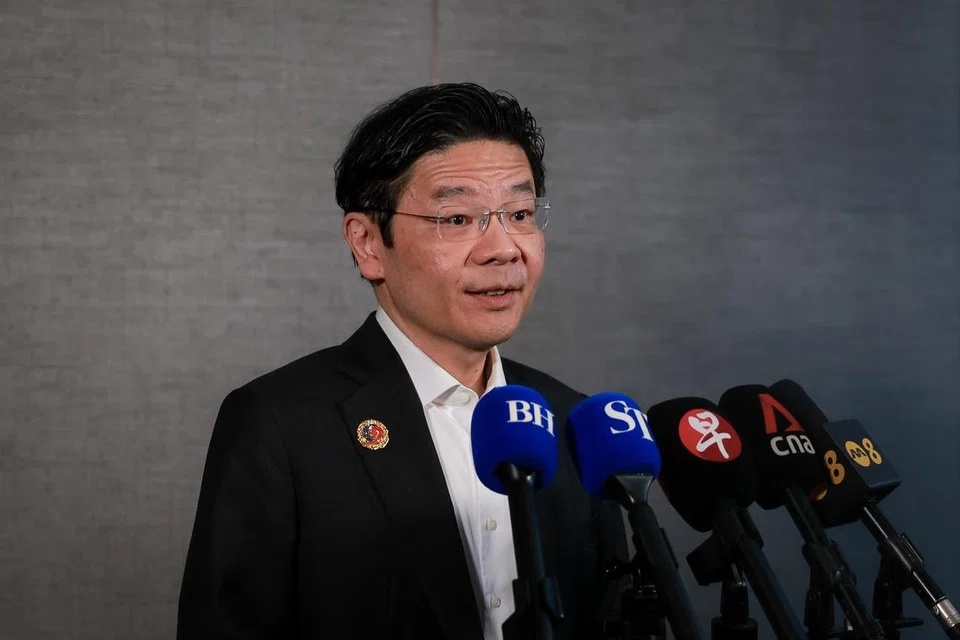
Singapore and Japan are in a strong position to open a new chapter in bilateral relations as they mark 60 years of diplomatic ties, Prime Minister Lawrence Wong said ahead of his official visit to Tokyo. Writing in a Nikkei op-ed published on March 17, Wong said the partnership has grown from one shaped by Japanese aid and investment into a broad and mutually beneficial relationship, giving both countries a solid base at a time of global uncertainty, fragmentation and disruption.
Wong is in Japan from March 17 to 19 for his first official visit there as prime minister. Singapore’s Prime Minister’s Office said the trip is part of his introductory visits to key regional partners and comes on the 60th anniversary of diplomatic relations. He is scheduled to meet Japanese Prime Minister Sanae Takaichi, who is the current Japanese leader, according to both Singapore and Japanese official sources.
How the relationship changed over six decades
In his op-ed, Wong traced the roots of the relationship to Singapore’s early years after independence. He noted that in the 1970s, major Japanese companies such as Toshiba, Sumitomo and Mitsui set up operations in Singapore. Those investments helped create jobs and build a manufacturing base in a still-developing economy.
The relationship deepened further in the 1980s. Wong said Singapore benefited from Japanese efforts to share expertise in quality and productivity. That support mattered because it helped Singapore move from labour-intensive production to more capital-intensive industrialisation, a shift that shaped the republic’s economic model for decades.
By the 1990s, the two sides were working comfortably together in new areas. Wong pointed to a 1994 initiative on technical assistance for third countries, which he said was Japan’s first such programme and continues today. That period showed that the relationship had moved beyond bilateral investment and into wider regional cooperation.
The trade pact that changed the partnership
Wong identified the 2002 Japan-Singapore Economic Partnership Agreement as another turning point. He described it as Singapore’s first free trade agreement with a major economy and Japan’s first free trade deal with any country. A free trade agreement is a pact that lowers trade barriers such as tariffs and creates clearer rules for business between two economies.
That agreement did more than increase commerce between the two countries. Wong said it helped Japanese firms expand into ASEAN and the wider Asia-Pacific from a Singapore base, while also strengthening Singapore’s role as an international business hub. The point matters because it shows how bilateral ties became linked to a larger regional strategy.
Why Singapore and Japan see each other as natural partners now
Wong argued that Singapore and Japan now share a wider strategic agenda. He said both countries are committed to free trade and rules-based multilateralism, and both are part of regional frameworks such as the ASEAN-Japan Comprehensive Economic Partnership, the Regional Comprehensive Economic Partnership and the Comprehensive and Progressive Agreement for Trans-Pacific Partnership. These agreements set common trade rules across multiple economies and help reduce friction in areas such as goods, services and investment.
He also highlighted joint work on trade digitalisation. Wong said Singapore and Japan helped facilitate an e-commerce agreement with Australia that established what he described as the world’s first baseline rules on e-commerce backed by 72 co-sponsors at the World Trade Organization. That example fits his broader argument that the relationship now extends into global rule-making, not just bilateral exchange.
Five areas where Wong wants deeper cooperation
Wong used the op-ed to outline five areas for closer cooperation. First, he said both countries should strengthen already robust economic ties, noting that they are among each other’s major trading partners and investors. Second, he said they should pursue new opportunities in the digital economy and help shape trusted cross-border data standards. Cross-border data flows are the movement of digital information between countries, a basic requirement for modern online trade and services.
Third, Wong called for greater collaboration in frontier sectors such as artificial intelligence, quantum technology and space technology. He argued that Japan’s industrial and technological depth complements Singapore’s role as a connected hub with a strong research ecosystem. Fourth, he said the two countries should work more closely with ASEAN, especially as Singapore is the country coordinator for ASEAN-Japan relations and will chair ASEAN in 2027. He specifically pointed to priorities such as the ASEAN Power Grid, a long-term regional plan to improve electricity connectivity across South-east Asia.
Fifth, Wong said Singapore and Japan should deepen cooperation across the wider region, including in security-related fields such as counter-terrorism, humanitarian assistance and disaster relief. He added that Singapore has long believed Japan can play a larger role in promoting peace and stability, while also acknowledging that historical memories still shape attitudes in parts of the region.
Why this visit matters beyond symbolism
The Tokyo trip is not just an anniversary visit. It is also an attempt to define where the relationship goes next. Wong’s framing suggests that Singapore sees Japan as more than a major investor or trading partner. It sees Japan as a like-minded state that can help defend open trade, build regional resilience and shape emerging rules in technology and economic security. That is especially relevant now, as official statements from both governments place the visit in the context of a more uncertain regional environment.
Wong also used a culturally resonant image to describe the moment. He noted that a 60th birthday is known in Japan as kanreki, a term associated with renewal and rebirth. His argument was clear: the anniversary is not the end of a mature partnership, but the start of a refreshed one.
At 60 years, Singapore-Japan ties rest on a long record of economic cooperation and steady trust. Wong’s message in Tokyo is that this history now gives both sides the confidence to do more together, from trade and technology to ASEAN and regional stability. That makes this visit less about commemorating the past than about setting the direction for the next phase of one of Singapore’s most important partnerships.