
South-East Asian Economies Reassess Growth Outlook Amid Slowing Global Demand

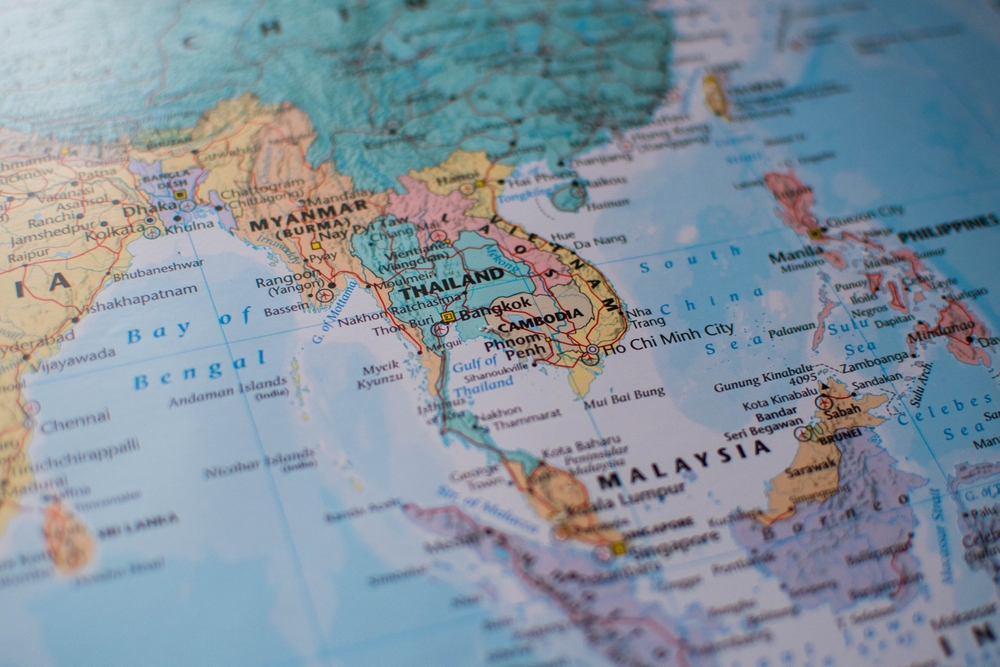
South-East Asian economies are recalibrating expectations for 2026. The region is still expanding. Yet the next phase looks less export-driven. Global demand is cooling. Financing remains selective. And companies are moving more cautiously on inventory and hiring.
For Singapore, this is familiar terrain. The city-state thrives when trade is strong. It feels the drag when orders slow. Policymakers and businesses are now watching the same question: can domestic demand and tourism carry more of the load if external demand softens?
A softer world economy changes the maths
The global picture is not a collapse. It is a slowdown with uneven pockets of strength. The International Monetary Fund expects global growth of about 3.3% in 2026, a pace that is steady but not strong enough to lift all exporters evenly.
At the same time, trade growth is expected to be constrained by uncertainty and shifting policies. UNCTAD has warned that subdued global growth in 2026 would weigh on trade prospects and investment flows.
For South-East Asia, that matters because many economies are tightly wired into global supply chains. Electronics, machinery, commodities, and intermediate goods remain key. When final demand slows in the US, Europe, or China, the effects show up quickly in Asian factory orders.
Southeast Asia growth faces a new balance
Regional growth is still expected to be solid, but the mix is changing. The Asian Development Bank’s December 2025 update raised its forecast for Southeast Asia to 4.4% for 2026, reflecting resilience in several economies.
However, the same update also implies a more complex outlook. Export momentum has been uneven. Services have helped, especially tourism and travel-related spending. Public investment has supported activity in some markets. Yet external headwinds remain, especially for trade-sensitive sectors.
Export signals are mixed, not reassuring
January data offered a reminder of how quickly sentiment can swing. A Reuters report on global factory surveys showed improving manufacturing activity in several major economies, including parts of Asia, supported by firmer demand and export orders.
Still, stronger purchasing manager readings do not guarantee a smooth year. Many firms remain cautious on pricing and inventory. Global demand can weaken again if consumers pull back or if trade policy uncertainty rises.
In practical terms, this means exporters are reassessing assumptions. Some are trimming growth targets. Others are spreading risk by diversifying markets and suppliers.
Singapore watches trade, but also resilience at home
Singapore’s official growth outlook already signals moderation. The Ministry of Trade and Industry forecast Singapore’s 2026 GDP growth at 1.0% to 3.0%, pointing to a slower pace after a stronger 2025.
This range reflects Singapore’s exposure to electronics cycles, global services demand, and regional trade flows. It also reflects a deliberate policy stance. Singapore is positioning itself for a world where supply chains shift, compliance costs rise, and growth is less predictable quarter to quarter.
Indonesia shows how domestic factors can complicate the picture
Indonesia remains a key bellwether for regional resilience because of its large domestic market and commodity links. Recent data highlights both strength and new pressures.
Indonesia recorded a stronger-than-expected trade surplus in December 2025, helped by firmer exports across several categories. At the same time, January 2026 inflation rose to its highest level in nearly three years, testing comfort around price stability.
This mix is important for the region. Stronger exports can support growth. Higher inflation can limit room for rate cuts. That, in turn, can affect consumption and investment.
What businesses are doing differently now
Across South-East Asia, companies are making similar adjustments.
They are shortening demand forecasts and reviewing inventory strategy. They are tightening credit checks and hedging more actively where currencies are volatile. They are also shifting capital spending toward projects that improve efficiency, not just expansion.
Many firms are also rethinking market exposure. A slowdown is rarely uniform. Some segments hold up, like data-related investment and certain high-value manufacturing niches. Others, like discretionary consumer goods, can slow faster.
What to watch next
Three signposts will shape the region’s growth narrative in 2026.
First is the direction of global trade and investment. If demand weakens further, export-heavy economies will feel it quickly. Second is inflation and policy space. If prices stay sticky, central banks may remain cautious. Third is China’s demand. Even small shifts in Chinese import appetite can move tourism, commodities, and manufacturing orders across ASEAN.
South-East Asia is not heading into a crisis. But the easy rebound phase is fading. The region is entering a more demanding cycle, where growth depends less on a global upswing and more on how well economies build resilience at home while staying connected to the world.