
Prabowo at Two: Indonesia’s Balancing Act Between Welfare Ambitions and Fiscal Discipline

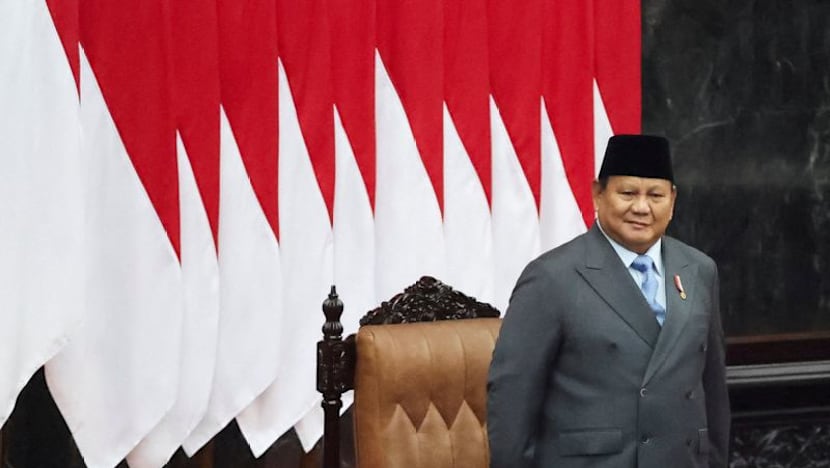
Indonesian President Prabowo Subianto marked two years in office on October 20, with his administration pointing to rice self-sufficiency, progress on energy independence and stronger-than-expected economic growth as its headline achievements. The numbers are not without merit. Yet as he enters his third year, the former military general confronts a more demanding test: sustaining an expansive welfare agenda without destabilising the fiscal architecture that underpins investor confidence in Southeast Asia’s largest economy.
The administration’s ambitions are broad and, in several cases, costly. Last month, Mr Prabowo instructed the Ministry of Higher Education, Science and Technology to develop a framework for eliminating tuition fees at all state universities. The government estimates that covering nearly three million undergraduate and diploma students would require an additional 93 trillion rupiah — roughly US$5 billion — annually. For students like Isyana Balqis, an undergraduate at the University of Indonesia, the proposal resonates: “I believe education should also be a priority when it comes to how our government spends its revenue.” Her peer Amanda Putri Dimas is more pointed, noting she works alongside her studies to cover tuition and calling the proposal something that “should have been planned from the very beginning.”
The free university plan sits alongside Mr Prabowo’s flagship free nutritious meals programme, which has expanded rapidly to reach more than 57 million beneficiaries — schoolchildren, toddlers, breastfeeding mothers and pregnant women. At least US$15 billion has been earmarked for the initiative in next year’s state budget. Indonesia’s parliament approved a 2027 budget projecting total expenditure at over US$228 billion, a figure that has reignited debate over the country’s statutory 3 per cent GDP deficit ceiling.
Fiscal Credibility Under Pressure
Some lawmakers have called for a review of the deficit cap to give the government greater spending flexibility. Critics argue the opposite. Bhima Yudhistira Adhinegara, executive director of the Centre of Economic and Law Studies (CELIOS), warns that relaxing the limit “implies that the government will do anything to raise funds for these priority programmes,” adding that “investors and creditors may start to view Indonesia as being a little reckless.” The concern is not merely theoretical. Last Friday, Indonesian stocks suffered their steepest single-day fall in nearly three decades after MSCI raised the prospect of stripping the country of its emerging market status — a signal the market is watching fiscal signals closely.
Against that backdrop, Indonesia’s economy has nonetheless shown genuine resilience. GDP expanded by 5.45 per cent in the first half of 2026, exceeding forecasts and prompting the IMF to revise its full-year projection upward. The caveat is significant: government spending rose 21.81 per cent in Q1 and 15.97 per cent in Q2, meaning a substantial share of that growth is publicly driven rather than private-sector-led. Analysts note that sustaining momentum toward Mr Prabowo’s declared target of 8 per cent annual growth will require stronger private investment, job creation and productivity gains — none of which flow automatically from public expenditure.
Mr Prabowo’s appointment of Suahasil Nazara as finance minister last month signals an attempt to hold the line. Mr Suahasil has pledged to keep the deficit below the 3 per cent ceiling, a commitment that will face mounting pressure as welfare commitments, infrastructure development and other national priorities compete for the same fiscal space.
Coalition Politics and the 2029 Horizon
Economic pressures are compounded by political ones. This month, Mr Prabowo carried out his seventh and largest cabinet reshuffle, replacing several high-profile figures across economic, diplomatic and security portfolios. Political observers read the move as an effort to tighten coalition discipline amid signs of declining public approval. Djayadi Hanan, head of the political science programme at Indonesian International Islamic University, frames the coalition’s current cohesion as transactional: “Everybody is compliant with Mr Prabowo because they expect political incentives.” As the 2029 general election approaches, that calculus may shift if approval ratings remain low and parties recalculate the cost of alignment.
A separate complication involves Vice President Gibran Rakabuming Raka, the eldest son of former president Joko Widodo. Efforts by some political parties to impeach Mr Gibran over questions about his educational credentials have not succeeded — the Constitutional Court dismissed a legal challenge on procedural grounds — but the controversy persists. The issue carries particular sensitivity given that Mr Joko Widodo’s support was instrumental in the political alliance that brought Mr Prabowo to power in 2024.
Compounding all of this is an acute environmental crisis. Forest and land fires have burned across parts of Indonesia for more than two months, deploying over 60,000 firefighters and generating transboundary haze that strains both public health and diplomatic relations with neighbouring states. Mr Prabowo has described the situation as one of his administration’s highest priorities, replaced the head of the disaster relief agency, and issued directives against slash-and-burn practices on peatland. Whether those measures translate into durable prevention remains to be seen — Indonesia has confronted recurring fire seasons for decades, and pledges of comprehensive reform have a mixed record.
Two years in, the Prabowo administration has assembled a recognisable record: welfare expansion, GDP growth, and institutional reshuffling. The harder question — whether these gains rest on a sustainable fiscal and political foundation — will define the next three years far more than the first two have.