
Seven Dead in Weeks: Singapore Tightens Workplace Safety Enforcement in Construction and Transport

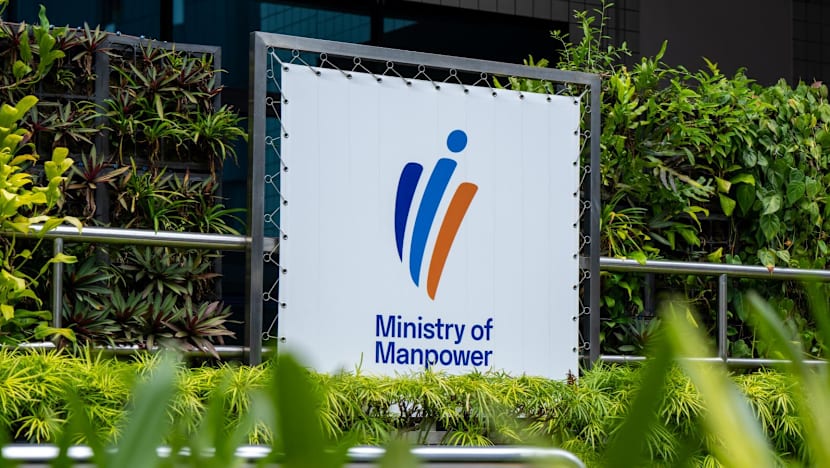
Seven workers are dead. The government’s response arrived on a Monday morning Facebook post.
The sequence of fatalities that prompted Singapore’s Ministry of Manpower to act began accumulating in September. Four of the deaths occurred in the construction sector, three in transportation and storage. Among the incidents: two workers fell into the sea at Tuas Port on September 22, and a 22-year-old construction worker died on September 28 after falling from height at a site along Tanjong Rhu Road. The deaths were not isolated accidents scattered across months — they clustered within weeks, in two industries, with identifiable patterns of cause.
The context matters. MOM’s own figures had already shown 21 workplace fatalities in the first half of 2026, translating to an annualised fatal injury rate of 1.1 per 100,000 workers. Vehicular incidents were the leading cause, accounting for nine of those deaths. Four of seven work-related traffic fatalities during the same period involved platform workers — a detail that sits uncomfortably alongside Singapore’s ongoing policy conversations about gig economy protections. The September deaths, then, did not arrive without precedent. They arrived as confirmation of a pattern that enforcement had not yet broken.
This was not the first time MOM had reached for the same toolkit. In June, following a separate spate of workplace fatalities, the ministry introduced enhanced enforcement measures nationwide, running from June 26 to July 31. Those measures included elevated fines, extended stop-work orders, and restrictions on migrant worker hiring for serious lapses. The June intervention was framed as decisive. By September, workers were dying again.
On October 5, MOM announced a voluntary safety time-out for companies in construction and in transportation and storage, scheduled to run through October 18. The ministry called the recent deaths a “grave reminder that workplace safety and health cannot be taken for granted” — language that, given the June precedent, carries a certain institutional weight. Companies were urged to review safety procedures, tighten risk controls, and pay particular attention to the safe use of concrete pumps and to measures preventing vehicles from rolling away, including ensuring handbrakes are engaged and wheel chocks deployed where appropriate.
Running alongside the time-out, MOM introduced enhanced enforcement measures in both industries from October 5 to November 4. The composition fine for first-time offences rose from S$2,000 to S$3,000, with steeper penalties for repeat or more serious violations. The minimum duration of stop-work orders extended from five weeks to eight. In what MOM described as “egregious cases” — serious safety lapses resulting in fatal or serious accidents — companies may be barred from hiring new migrant workers for three months. The migrant worker hiring bar is a significant lever in an industry structurally dependent on foreign labour, and its deployment as a deterrent reflects MOM’s recognition that financial penalties alone have not proven sufficient.
Minister of State for Manpower Dinesh Vasu Dash addressed the rationale directly on October 5, noting that the concentration of fatalities in these two specific sectors drove the targeted response. “The seven workplace fatalities since September are deeply concerning, and we must act decisively to prevent further loss of lives,” he said, calling on industry partners and stakeholders, including the labour movement, to reinforce the effort within their networks.
From the union side, Melvin Yong — MP for Radin Mas, executive secretary of the Built Environment and Urban Trades Employees’ Union, and assistant secretary-general of NTUC — offered support for the tougher measures while setting a sharper moral frame. Companies that “cut corners on safety” must face serious consequences, he wrote. He was equally pointed about the risk of the time-out becoming procedural theatre: employers must provide safe systems of work, supervisors must stop unsafe work immediately, and workers must be able to raise concerns without fear of reprisal. “This cannot become another statistic that we acknowledge today and forget tomorrow,” he wrote. “Because behind every fatality is a family left grieving.”
What the October measures share with their June predecessors is both their logic and their limitation. They are reactive instruments applied after deaths have occurred, calibrated to sharpen deterrence at the margin. Whether the structural conditions that produce workplace fatalities in Singapore’s construction and logistics sectors — subcontracting chains that diffuse accountability, cost pressures that incentivise shortcuts, migrant workers whose precarious status may discourage them from surfacing hazards — are addressed by fine increments and extended stop-work orders is a question the ministry’s post did not engage. MOM closed by urging employers to use the time-out to engage workers and supervisors on workplace risks. The instruction is sound. Whether it is sufficient is another matter entirely.