
‘I Cannot Go Back’: Myanmar Refugees Confront the Threat of Forced Return as Malaysia and Thailand Court Naypyidaw

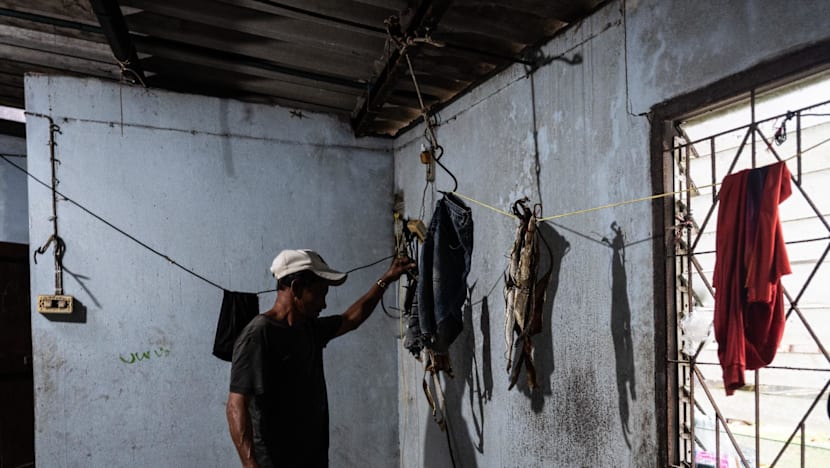
Mohamed Sadek has lived in Kuala Lumpur for nearly two decades. He runs — or rather, ran — a school for Rohingya children in the city, a modest institution that operated for seven years before authorities shuttered it a few months ago for lacking valid operational permits. “We can only respect the Malaysian law,” he said, with a wryness that carries the weight of a man who has long since learned to absorb indignities quietly. At 54, Sadek fled Rakhine State in western Myanmar to escape persecution and violence. He built a life in Malaysia not out of choice, but necessity. Now, he fears that life may be dismantled by the very government that once offered him refuge.
Hundreds of kilometres to the northeast, in a coastal settlement in southern Thailand, a 39-year-old woman named Lele Khine works shifts at a seafood processing plant and tries not to think too hard about what comes next. She arrived in 2023, fleeing fighting between Myanmar’s military and rebel forces in the southernmost Tanintharyi region. Her husband had crossed more than a year earlier; she followed when he had saved enough to pay for her passage. They spent months scraping together money to bring their three children — aged nine to fifteen — across the border. “We could hear bombs dropping from the sky,” she said. “I was very worried about my family.” Today, the bombs are still falling in Tanintharyi. And yet, the country that sheltered her family is edging closer to the government responsible for dropping them.
The Policy Shifts Reshaping the Region
Across Southeast Asia, the diplomatic weather has changed. Malaysia and Thailand — the two countries hosting the largest concentrations of Myanmar refugees outside Bangladesh — have both moved to warm relations with the military junta in Naypyidaw, a government that the Association of Southeast Asian Nations has formally excluded from high-level summits since the February 2021 coup. The consequences for the hundreds of thousands of displaced Myanmar nationals sheltering in both countries are immediate and alarming. Malaysia has announced plans to repatriate 5,000 Myanmar refugees, with the Home Ministry confirming that the first 1,476 people — whose ethnic backgrounds have not been publicly disclosed — are scheduled to depart on board two Myanmar Navy warships and a hospital ship. Thailand, meanwhile, has enacted legislation authorising the swift deportation of foreign nationals who violate domestic regulations, a measure human rights advocates warn will expose refugees to forced removal with little legal recourse.
Malaysian Prime Minister Anwar Ibrahim framed his government’s engagement with Myanmar’s commander-in-chief Min Aung Hlaing in transactional terms. “Why did I invite him? I invited him because I want to tell him that we can be friends and trade. We can accept Myanmar, but they must accept (its refugees) back,” Anwar said on September 16. He acknowledged the suffering of the Rohingya in a podcast that same day, but maintained that Malaysia could not accommodate them permanently. Myanmar, for its part, has pledged “safe and dignified” returns. Thailand’s approach has been no less consequential in practice: days after Min Aung Hlaing’s official visit to Bangkok on August 6, Thai authorities raided an undocumented Karen community in Kaeng Krachan National Park, arresting 28 villagers — including children and pregnant women — and slating 26 for deportation.
Who Is at Risk, and Why They Left
The scale of displacement is substantial. According to the United Nations refugee agency’s figures from February, Malaysia hosts 193,824 refugees from Myanmar, comprising 126,144 Rohingya, 15,774 Chin, and 33,002 individuals from other ethnic communities. Thailand accommodates over 90,000 refugees — predominantly Karen, Karenni and Burmese — across nine temporary shelters administered by the Thai government along the border. Indonesia, geographically less accessible and offering fewer economic opportunities, hosts around 2,800 Myanmar refugees and functions largely as a transit country. Neither Malaysia nor Thailand has ratified the UN Refugee Convention, nor do they formally recognise refugee status — a legal lacuna that has always left displaced Myanmar nationals exposed, and which now makes them structurally vulnerable to policies driven by domestic political calculation rather than international protection norms.
The displacement itself did not begin with the 2021 coup. It spans nearly four decades, unfolding across three broad historical waves driven by military offensives, ethnic violence and successive political crackdowns. James Bawi Thang Bik, a Chin refugee who has lived in Kuala Lumpur for almost fifteen years, fled Myanmar originally to escape conscription. He told CNA that the announcement of 5,000 repatriations came as a profound shock. “We hope that things will change and that we can go back to Myanmar one day, but the whole Chin state and Myanmar is a complete war zone. There isn’t any peace in the country,” he said. His concern is not abstract: in 2024, Myanmar’s military government announced compulsory service for all men aged 18 to 35 and women aged 18 to 27, mandating at least two years under military command.
Ye Htet, a 29-year-old from Mon State who now works on a rubber plantation in southern Thailand, made the three-day trek through forests and mountains to the Thai border four years ago for precisely that reason. “I know people who were forced to become soldiers. I knew that if I stayed, sooner or later they would come for me,” he said. He crossed into Thailand and felt, for the first time in years, that he was safe. That sense of safety has since eroded. “I miss my home. I miss my family. No matter what, Thailand is not my country,” he said. “But I cannot go back in the foreseeable future. For someone my age, if I return to Myanmar, I will become a soldier for sure. I don’t want to fight anyone. I don’t want to kill anyone. But if they make me a soldier, I will have no choice. I think I will die.”
The Domestic Politics Driving Repatriation
Regional analysts attribute the shifting postures of host governments to a combination of refugee fatigue, domestic electoral pressures and calculated diplomatic self-interest. Teuku Rezasyah, an international relations expert at Indonesia’s President University, argues that Thailand and Malaysia are simply running out of patience. “They are growing impatient and, because of that, they start to improvise,” he said. Thailand, he noted, is scheduled to assume the ASEAN chairmanship in 2028 — a position that gives Bangkok considerable leverage over how the bloc approaches Myanmar, and one that Myanmar’s junta is likely keen to cultivate. “From Myanmar’s perspective, it potentially has a powerful ally within ASEAN during this period,” Teuku observed.
Malaysia’s calculus is shaped by a different set of pressures. Mahi Ramakrishnan, founder of the refugee advocacy group Beyond Borders, believes the country’s next general election — due by February 2028 — is a significant factor. She pointed to the ruling Pakatan Harapan coalition’s losses in recent state polls in Sabah, Johor and Negeri Sembilan as context for the government’s harder line. Negative public sentiment toward refugees, particularly the Rohingya, has intensified in recent months, partly fuelled by disinformation and economic anxiety. In June, the Human Rights Commission of Malaysia reported growing hostility, discriminatory rhetoric and online attacks directed at the Rohingya community. In late July, locals evicted over 100 Rohingya refugees from their homes in Penang, forcing them to camp outside the UNHCR office in Kuala Lumpur before aid groups and the agency relocated them to temporary housing. The closure of several Rohingya learning centres across the country in recent months reflects the same deteriorating climate. Sadek’s school was among them.
Khoo Ying Hooi, of Universiti Malaya’s International and Strategic Studies Department, identifies a diplomatic incentive for Myanmar’s junta to accept the refugees. “Engagement with Anwar allows Myanmar’s authorities to demonstrate that, despite ASEAN’s restrictions on high-level participation since the 2021 coup, they can still conduct bilateral diplomacy with ASEAN governments,” she said. The concern, she added, is not whether Myanmar is willing to receive returnees, but whether Malaysia can credibly guarantee their safety once they arrive. Min Aung Hlaing has also made recent trips to Vietnam and Cambodia, suggesting a deliberate strategy of bilateral re-engagement to circumvent ASEAN’s collective restrictions.
The Legal and Moral Stakes
The repatriation plans have drawn sharp criticism from international human rights bodies. UN High Commissioner for Human Rights Volker Türk has stated unequivocally that such returns would breach the principle of non-refoulement — the foundational international norm prohibiting the return of individuals to countries where they face torture, cruel treatment or other irreparable harm. Speaking at a dialogue on Myanmar in Geneva on September 7, Türk said “there can be no question of returning Rohingya and other refugees to Myanmar at a time of such insecurity and danger.” He cited airstrikes as the primary cause of civilian deaths, flagged forced conscription, and condemned the military’s obstruction and weaponisation of humanitarian aid, particularly in minority areas.
Teuku warns that Malaysia and Indonesia must weigh the geopolitical costs of abandoning the Rohingya. “There could be a backlash from other Muslim-majority nations that continue to view the Rohingya as a persecuted Muslim population. At the same time, they risk sharp criticism from Western countries that still regard Myanmar’s military regime as illegitimate,” he said. Mahi of Beyond Borders drew a pointed contrast between Malaysia’s treatment of Myanmar refugees and its vocal solidarity with Palestinians — a contradiction that has not gone unnoticed domestically. Anwar himself acknowledged on July 29 that “good relations” with Myanmar had enabled the two governments to negotiate on the refugee issue, a framing that implicitly elevates bilateral diplomacy over protection obligations.
Kasit Piromya, Thailand’s former foreign minister and a member of the Special Advisory Council formed in response to the 2021 coup, was blunter in his assessment of Bangkok’s conduct. He characterised Thailand’s decision to engage directly with Min Aung Hlaing as short-sighted and self-serving, arguing it has shattered any remaining semblance of a unified ASEAN position on Myanmar. He noted that the day after Min Aung Hlaing returned from Bangkok, Myanmar’s government rejected a request by the ASEAN Special Envoy — Philippine Foreign Secretary Theresa Lazaro — to meet with detained democracy icon Aung San Suu Kyi. The sequence was not coincidental.
ASEAN’s Five-Point Consensus and Its Diminishing Credibility
The deeper institutional question is what the bilateral manoeuvring of Thailand and Malaysia means for ASEAN’s coherence on Myanmar. Since the 2021 coup, the bloc has operated under its Five-Point Consensus — a framework calling for an immediate cessation of violence, constructive dialogue among all parties, the appointment of a special envoy, the delivery of humanitarian assistance and the envoy’s access to all relevant actors. Five years on, none of these conditions have been meaningfully met. Khoo of Universiti Malaya argues that Malaysia’s repatriation plans expose the framework’s failure in stark terms. “The basic logic of the five-point consensus was to reduce violence, facilitate political dialogue and allow humanitarian assistance. But it has been five years, and the conditions inside Myanmar are still considered unsafe, then clearly those underlying objectives have not been achieved,” she said.
The contradiction is structural. Malaysia held the ASEAN chairmanship last year and pushed for a stronger collective voice on Myanmar. To simultaneously return refugees to a country where the conditions that drove their displacement remain unresolved is, as Khoo put it, “a clear contradiction between ASEAN’s diplomacy towards Myanmar and the way ASEAN member states deal with the human consequences of the crisis.” Indonesia’s Foreign Ministry has been more cautious, with spokesperson Yvonne Mewengkang affirming that bilateral engagements between Myanmar and individual ASEAN states do not automatically affect the bloc’s centrality, and that the five-point consensus “will remain ASEAN’s primary framework.” Whether that position holds as Thailand, Malaysia and others pursue their own arrangements with Naypyidaw remains an open question.
Thai Foreign Minister Sihasak Phuangketkeow, in an August interview with Thai PBS World, cited the release of political prisoners and Aung San Suu Kyi’s transfer from prison to a “designated residence” as evidence of “measurable progress” justifying “calibrated re-engagement.” He also pointed to the practical realities Thailand faces: continued fighting has pushed thousands across the border, while cross-border pollution and scam operations originating in Myanmar compound the domestic burden. There is also a broader strategic anxiety — that an isolated Myanmar risks becoming a theatre for major power rivalry, a concern shared across the region.
The Human Stakes That Remain
For Sadek, Khine, Bawi and Ye Htet, these institutional debates play out against the texture of daily life — the school that no longer opens, the plantation shift that starts before dawn, the children who have grown up not knowing their grandparents’ villages. Sadek said he does not believe Malaysia will send back anyone whose life is in danger, though his confidence carries the fragility of a man who has already watched one institution he built be taken from him. “Myanmar is my country but it is not safe for us. We came here not to stay here forever, but to make preparations to return one day. Unfortunately, we cannot do that at the moment,” he said. He also raised the question that haunts the Rohingya specifically: many have been in Malaysia since the 1980s, stateless, without Myanmar citizenship, unable to return and unable to settle permanently. “The Rohingya must be resettled to third countries where they can find a permanent home,” he said. “Many have been here since the 1980s but are still in limbo.”
Bawi still thinks about Chin State around Christmas, the kind of specific, seasonal longing that tells you everything about what displacement actually costs. Khine wonders whether she will be able to go home before she grows old. “I feel very sad about what is going on in my country right now,” she said. “I cannot talk about Myanmar without crying. If Myanmar can return back to peace, I want nothing more than to go back to Myanmar.” The peace she describes is not a diplomatic abstraction — it is the condition under which her husband will not be conscripted, her children will not hear bombs, and she will not have to measure out her grief in shifts at a seafood plant on a foreign coast. Until that condition is met, the question of whether Malaysia and Thailand’s diplomatic recalibrations constitute pragmatism or abdication will remain, for the people most affected, entirely beside the point.