

Singapore Looks to Canada for Energy and Food Security Amid Escalating Middle East Disruptions

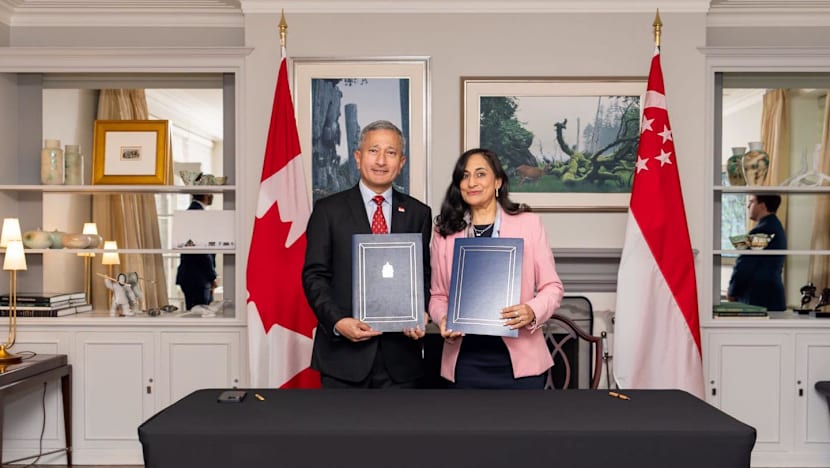
Singapore’s Foreign Affairs Minister Vivian Balakrishnan warned on Saturday (Sep 19) that the city-state must brace for sustained disruptions to Middle East energy supplies, while simultaneously announcing that Singapore is actively exploring Canada as an alternative source of both energy and food. Dr Balakrishnan made the remarks to reporters following back-to-back visits to Doha and Ottawa — the latter representing the first trip by a Singapore foreign minister to Canada since 2013.
The closure of the Strait of Hormuz has constituted what Dr Balakrishnan described as a “major, major impediment” to liquefied natural gas exports from Qatar, one of Singapore’s principal LNG suppliers. He further flagged mounting pressure around the Bab el-Mandeb strait, which connects the Red Sea to the Gulf of Aden and serves as a critical corridor for Saudi Arabian energy exports. “We have to anticipate further disruptions to fuel supply from the Middle East in general,” he said, adding that Singapore has thus far managed to absorb the shock through supply diversification. The Ministry will continue to monitor developments and coordinate with partner nations.
Canada as a Strategic Complement
Dr Balakrishnan characterised Canada as an energy “superpower” — a country commanding significant reserves in both fossil fuels and renewable energy — and indicated that Singapore is examining the feasibility of formalising trade arrangements covering essential supplies. The two sides are also exploring collaboration in artificial intelligence, the digital economy, and digital payments infrastructure. During the Ottawa visit, Dr Balakrishnan and Canadian Foreign Affairs Minister Anita Anand signed a joint declaration establishing the foundation for an economic partnership framework, with both governments targeting finalisation within two to three months.
The diplomatic groundwork for this visit had been laid by Ms Anand’s trip to Singapore in October last year — when the two countries marked 60 years of diplomatic relations — and by Canadian Prime Minister Mark Carney’s visit to Singapore that same month.
“We were really looking for complementarities between Canada and Singapore,” Dr Balakrishnan said, “and I think this will give us many opportunities, including for Singaporean companies who want to invest in Canada.”
ASEAN-Canada Trade and the Shifting Global Order
The ministerial visit also carried a broader geopolitical dimension. With Canada navigating trade tensions with the United States and actively seeking to redistribute its economic bandwidth across both the Atlantic and Pacific, Dr Balakrishnan positioned this reorientation as an opening for Southeast Asia. He was careful to avoid direct commentary on the Canada-US relationship, stating it was not Singapore’s role to insert itself into bilateral friction between neighbours. What he did assert, however, was that Canada’s outward turn presents a structural opportunity for the region — one Singapore intends to capture.
Dr Balakrishnan expressed hope for a “significant breakthrough” in negotiations toward an ASEAN-Canada free trade agreement, a process that gains additional salience given that Singapore assumes the ASEAN chairmanship from the Philippines on January 1, 2027. He framed Canada as a “like-minded partner” that shares Singapore’s commitment to rules-based, liberal, and open trade — a formulation that carries deliberate weight in the current climate of economic nationalism. “Now that the stars are aligned,” he said, “we should maximise the opportunities in this relationship.”



