

Go-Ahead Singapore’s Tampines Transition: What Went Wrong and What Comes Next

A New Operator, Familiar Frustrations
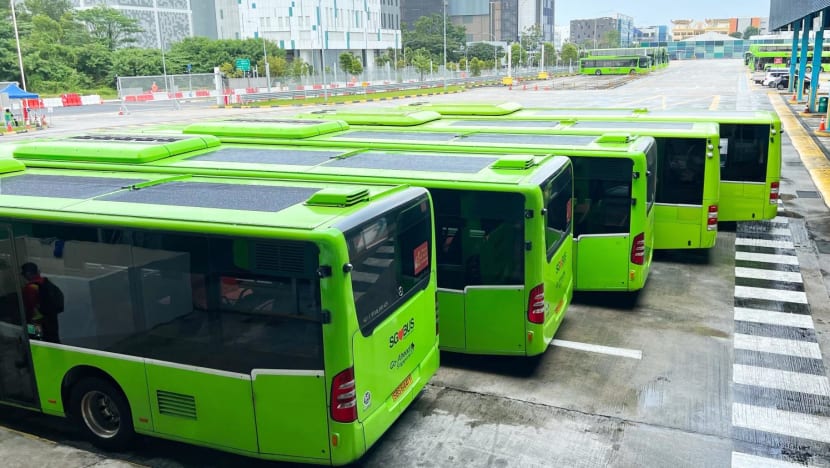
When Go-Ahead Singapore assumed control of 27 bus routes in Tampines from SBS Transit in July 2020, it inherited not just a contract but a set of commuter expectations shaped by years of established service. Within weeks, those expectations collided with operational reality. Residents reported longer waiting times, erratic frequencies, and the particularly visible symptom of bus bunching — multiple buses arriving in quick succession after prolonged gaps — prompting complaints that reached the desk of Member of Parliament Baey Yam Keng (PAP-Tampines).
The contract itself was substantial: a S$646 million award from the Land Transport Authority (LTA), secured after Go-Ahead outscored bids from SBS Transit, SMRT Buses, and Tower Transit Singapore in a two-envelope evaluation process that assessed quality before price. LTA confirmed that Go-Ahead achieved the highest total score and offered cost savings relative to the incumbent contract. That procurement outcome now sits in uncomfortable tension with the service disruptions commuters are experiencing on the ground.
The Mechanics of Disruption
Go-Ahead’s public acknowledgement, issued on Tuesday via a Facebook post, attributed the difficulties to the inherent complexity of any large-scale operational transition. Approximately 40 per cent of Go-Ahead Singapore bus captains assigned to the Tampines contract are newly recruited, meaning a significant portion of the workforce is simultaneously learning routes, road conditions, and operating protocols specific to the area.
The challenge extends beyond route familiarity. Go-Ahead has relocated its base of operations to a new integrated depot on East Coast, from which buses are deployed each morning to their respective interchanges. For bus captains previously accustomed to the SBS Transit depot’s location, this shift carries cascading practical consequences: altered off-service travel times, revised commute durations from home, and disrupted meal and rest break schedules.
These are not trivial adjustments. Baey, who also serves as Minister of State for Transport, noted that such logistical changes can affect work attendance and performance — and, by extension, service reliability. The human dimension of bus operations is often underweighted in procurement and transition planning, yet it surfaces quickly once services go live.
Go-Ahead’s Operational Response
In response to the complaints, Go-Ahead has deployed additional staff to bus interchanges and key stops across Tampines. These ground-level personnel are tasked with monitoring service intervals, managing headways in real time, and providing guidance to bus captains still building their operational confidence. The operator characterised this as a transitional support measure rather than a structural fix, framing it explicitly as a mechanism to allow bus captains to receive “timely support and guidance” while they acclimatise.
Go-Ahead stated it remains “fully committed” to delivering safer, more reliable, and more consistent journeys — language that signals institutional awareness of the reputational stakes involved, even if it stops short of specifying measurable targets or timelines for improvement.
Political Oversight and the Monitoring Framework
Baey’s involvement reflects the degree to which public transport reliability in Singapore carries direct political weight. Following a meeting between Baey, grassroots leaders, and Go-Ahead’s senior management, a more structured monitoring framework was proposed. The approach centres on targeted surveillance at key bus stops: measuring actual waiting times, identifying patterns of recurring delay, and pinpointing locations where bus bunching is most acute. That data is intended to inform specific corrective action rather than general assurances.
Baey confirmed that he and grassroots leaders will continue tracking affected services in close coordination with both LTA and Go-Ahead. The LTA, as the regulatory authority and contracting party, retains oversight responsibility throughout the contract’s duration — a five-year term, with an option to extend by between two and five additional years.
The monitoring commitment matters because it establishes accountability beyond the operator’s self-reporting. Whether that accountability produces measurable service improvements within a timeframe commuters find acceptable remains the open question.
What the Tampines Case Reveals About Bus Contracting
Singapore’s bus contracting model, in which private operators bid for geographically defined route packages under LTA’s regulatory framework, is designed to introduce competitive discipline while preserving public service obligations. The Tampines transition exposes a structural tension within that model: the evaluation criteria that determine contract awards — quality scores, cost efficiency — do not fully capture the operational friction generated by switching operators mid-service.
Workforce continuity is one dimension of that friction. When a new operator wins a package, it does not automatically inherit the experienced workforce of its predecessor. Recruitment of new bus captains, retraining of retained staff, and the absorption of a new depot geography all impose transition costs that manifest as service degradation before stabilisation occurs. Go-Ahead’s acknowledgement that 40 per cent of its Tampines captains are new is, in this context, not merely an explanation — it is a structural feature of how competitive tendering interacts with operational continuity.
The Tampines episode is not unique in Singapore’s transport history, but it arrives at a moment when commuter expectations of reliability are high and tolerance for disruption is limited. How quickly Go-Ahead can close the gap between its procurement performance and its service delivery will determine whether the transition is remembered as a temporary rough patch or a more instructive case study in the limits of competitive contracting.



