
Lee Jae-myung’s Approval Crisis: Why Housing Policy Is Undermining South Korea’s Liberal Presidency

A Presidency Under Pressure
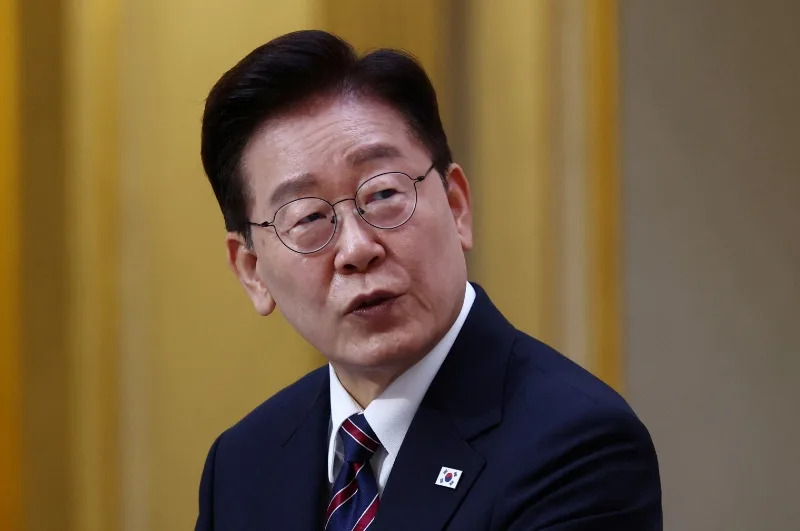
South Korean President Lee Jae-myung has entered his second year in office with a political problem that is becoming structurally difficult to reverse. His approval rating fell to a record low this week, with a Realmeter survey published on Monday recording 63.3% disapproval against just 33.8% support. The thesis here is straightforward: Lee’s declining numbers are not a temporary public mood shift but the symptom of a deeper policy contradiction — one in which a liberal administration’s instinct to constrain speculative capital in the housing market has simultaneously locked out the aspirational middle class it was elected to represent.
The Blue House has acknowledged the decline, but carefully. Spokesperson Kang Yu-jung described it as “a compound result of various policy issues such as real estate and the stock market as well as political issues,” signalling that the administration sees no single lever to pull. That framing, while technically accurate, may itself be part of the problem: diffused diagnosis tends to precede diffused remedies.
The Housing Trap
Lee’s housing policy follows a recognisable progressive logic. He has moved to raise taxes on owners of multiple homes and expensive properties, while tightening borrowing restrictions on leveraged purchases — measures designed to cool speculation and redirect capital away from real estate as an investment vehicle. The intent is defensible. The political execution has proven costly.
Critics argue the measures have produced an unintended consequence: prospective homebuyers, particularly younger urban households without existing property wealth, now find themselves priced out not by speculation alone but by the combined effect of constrained credit and insufficient supply. The parallel with Moon Jae-in’s presidency is instructive. Moon pursued broadly similar anti-speculation measures between 2017 and 2022, and housing affordability worsened markedly under his watch, contributing to his party’s eventual electoral losses. Lee appears to be retracing that trajectory with awareness of the risk but insufficient structural deviation from the same policy path.
The Yongsan district debate crystallises the tension. Approximately 2,800 acres of land are being freed up in central Seoul, including a 740-acre green zone comparable in scale to New York’s Central Park. During his presidential campaign, Lee pledged to preserve this as a “Central Park for Korea.” Now, with housing supply pressure mounting, that pledge sits in direct conflict with the pragmatic demand to build high-density residential units on scarce urban land. Urban development commentator Kim Si-deok has noted that Lee risks being perceived as governing for those who prefer Seoul as a “boutique city” rather than a functional mass housing market — a damaging characterisation for a politician whose base includes working-class and lower-middle-income voters.
Institutional Confidence and Cabinet Turbulence
Housing is not the only variable. The Realmeter polling also cited public dissatisfaction with cabinet appointments, specifically the withdrawal of a gender equality minister nominee and ethics violation accusations levelled against the justice minister nominee. These are not peripheral issues. In South Korea’s political culture, cabinet appointments carry significant symbolic weight — they signal the administration’s values, its standards of governance, and its seriousness about institutional integrity. Nomination controversies of this kind erode precisely the trust that a reform-oriented liberal government needs to sustain credibility on harder economic questions.
Lee has not publicly addressed his falling ratings directly, though he has previously stated that what matters is performance at the finish line rather than mid-term polling. “I’m going to do my best with the expectation that it’ll be higher when I finish,” he said early in his presidency. That long-game framing draws on his own political biography: as mayor and later governor of Gyeonggi, South Korea’s most populous region, his approval rose from 29% in 2018 to a peak of 72% two years later before he left office at around 60%. The presidency, however, operates under different institutional pressures and a shorter tolerance for sustained decline.
The Parliamentary Stakes
The political arithmetic sharpens the urgency. South Korea holds parliamentary elections in approximately two years, and the Democratic Party’s ability to retain its legislative majority depends substantially on whether Lee can recover public confidence before that cycle begins. Liberal pundit Kim Eo-joon, an early Lee supporter, stated bluntly on his YouTube channel last month: “Once you hit 3 in the first digit in support rating, no president has recovered from that.” That is a structural observation, not merely a rhetorical warning — and it reflects a genuine pattern in South Korean presidential politics, where approval collapses tend to become self-reinforcing as political capital erodes and legislative cooperation becomes harder to secure.
The Blue House has indicated that Lee plans to address the public directly, though the format remains under review. The choice of format will itself carry meaning: a press conference signals accountability, a televised address signals managed messaging. For an administration whose core problem is a perception gap between stated policy intent and lived economic experience, the medium will be read as carefully as the message. What Lee’s approval crisis ultimately reveals is that institutional sophistication in policy design — raising taxes, tightening credit, preserving green space — does not automatically translate into political legitimacy when the distributional consequences fall hardest on the very constituencies a progressive government claims to protect.