
Japan Warns of “Critical” Alliance Stakes as Trump Scales Back Korea Drills and Courts Kim Jong Un

A Calculated Disruption to Northeast Asian Security Architecture
The thesis is straightforward, even if its implications are not: Donald Trump’s decision to scale back joint military exercises with South Korea, paired with his public praise of Kim Jong Un and his rebuke of Seoul over Iran, represents a deliberate and structurally significant disruption to the security architecture that has underpinned Northeast Asian stability for seven decades. Japan’s response — measured, diplomatic, yet unmistakably urgent — signals that Washington’s closest regional partners are recalibrating in real time.
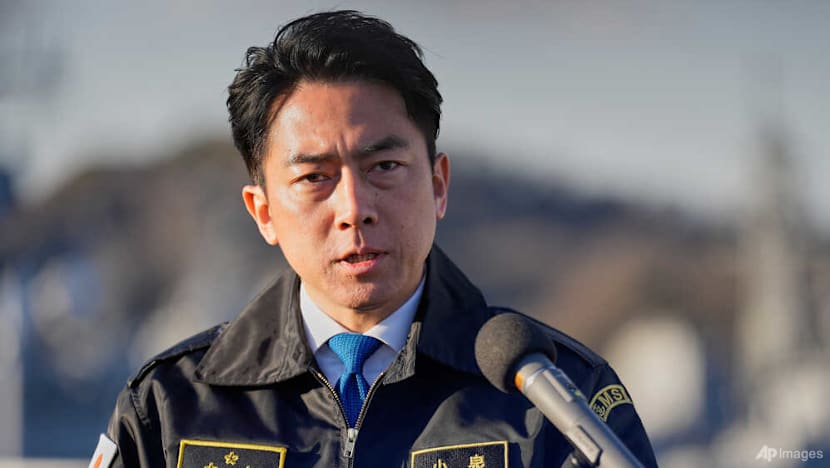
Japanese Defence Minister Shinjiro Koizumi, speaking in Sydney on Tuesday during a visit to Australia, did not mince words. “As Japan faces the most severe and complicated security environment in the post-war era, the cooperation among Japan, the United States and South Korea is critical to the peace and stability of the region,” he told journalists. The word “critical” was not rhetorical filler. It was a precise signal — directed as much at Washington as at any other audience — that the trilateral security relationship is not a line item to be traded away in personal diplomacy with Pyongyang.
Trump’s Pivot and Its Structural Consequences
Trump announced abruptly on Sunday that he had ordered the Pentagon to scale back what he called “inappropriate and hostile” military drills with South Korea — a move timed, with characteristic bluntness, just one day before the annual Ulchi Freedom Shield exercises were scheduled to begin. The 11-day exercises are designed to prepare allied forces for a potential conflict with North Korea, and Pyongyang has long condemned them as rehearsals for invasion. That North Korea’s framing now appears, at least partially, in a sitting US president’s characterisation of the drills is not a trivial observation.
Trump compounded the disruption on Monday by insisting his personal relationship with Kim Jong Un was making the situation “much safer,” noting that the two had exchanged messages he described as “very positive.” He met Kim three times during his first term but has not done so since returning to the White House. Seoul’s unification ministry stated plainly that it “cannot verify the specific content of the exchanges” between Washington and Pyongyang — a diplomatically restrained way of acknowledging that a key ally is conducting backchannel engagement with a nuclear-armed adversary without full transparency to the parties most directly at risk.
The exercises have proceeded as planned, South Korean officials confirmed, and Seoul’s presidential office was careful to stress that the drills carry “no intention to attack North Korea or escalate tensions on the Korean peninsula.” North Korea has not publicly responded. But the damage to deterrence credibility is not measured in Pyongyang’s press releases — it accumulates in the strategic calculations of every actor watching Washington’s reliability as an anchor.
The Iran Dimension and the Conditional Alliance
Trump’s rebuke of Seoul over Iran introduced a further, more corrosive element. Speaking from the Oval Office, Trump said: “We have 39,000 soldiers over there, guarding you from Kim Jong Un, your next-door neighbour, and you’re not going to help us on a very easy military operation in Iran. That’s strange.” The figure he cited exceeds the official deployment of approximately 28,500 US troops stationed in South Korea — a legacy of the 1950–1953 Korean War, which ended in armistice rather than peace treaty — but the arithmetic matters less than the logic embedded in the statement. Trump is treating the US security umbrella as a transactional instrument, conditioned on allied compliance with American military priorities far beyond the immediate region.
Seoul responded with careful pragmatism. National security adviser Wi Sung-lac confirmed that South Korea had reviewed “practical military contributions” it could make toward freedom of navigation in the Strait of Hormuz, subject to its defence readiness and domestic legal procedures. This is the language of a government managing a relationship under duress — neither capitulating nor openly defying, but threading a needle that grows narrower by the week.
A Region Forced to Hedge
The broader regional picture reinforces the structural argument. The USS George Washington, currently the only US aircraft carrier operating in the Pacific, is being redeployed to the Middle East to relieve the USS Lincoln — a vessel that has itself become a focus of concerns over crew mental health and extended deployment. The Pacific’s carrier presence is thinning precisely as its security environment grows more complex.
Australia’s Defence Minister Richard Marles, hosting Koizumi in Canberra, stated that Australia was “very concerned about North Korea’s nuclear programme as well as its missile programme.” Taiwan’s President Lai Ching-te, operating under intense US pressure to increase defence spending, pledged record military expenditure for 2027 and committed to raising defence spending to 5 per cent of GDP by 2030. Across the region, US partners are being pushed to spend more and rely less — a posture that may, over time, produce more capable allies, but in the near term creates dangerous windows of strategic ambiguity.
What emerges from this constellation of events is not chaos, but a coherent — if deeply unsettling — pattern. Trump is restructuring the terms of American alliance commitments, substituting personal diplomacy with adversaries for institutional deterrence, and demanding transactional reciprocity from partners who have long operated within a framework premised on shared values and collective security. Japan’s insistence on the word “critical” is therefore both a description of the present and a warning about what its absence would mean. The architecture can absorb pressure. Whether it can absorb its anchor’s deliberate ambivalence is a different question entirely.