
Perennial Living Opens Singapore’s First Private Assisted Living Development, Targets 30% Occupancy in Year One

The idea took shape long before the doors opened. Perennial Holdings, a Singapore-listed conglomerate with roughly a decade of eldercare operations in China and approximately 38,000 beds in its portfolio, had been watching Singapore’s ageing demographic curve with the kind of attention that precedes capital commitment. The question was not whether demand would materialise. The question was when, and at what price point, and whether Singaporean seniors could be persuaded to leave their homes at all.
The answer, or at least the opening bid, arrived on Tuesday, 18 August, when Perennial Living formally began operations at Parry Avenue. The 195,000 sq ft development is Singapore’s first private assisted living facility of its kind — positioned deliberately between the independence of home and the clinical intensity of a nursing home.
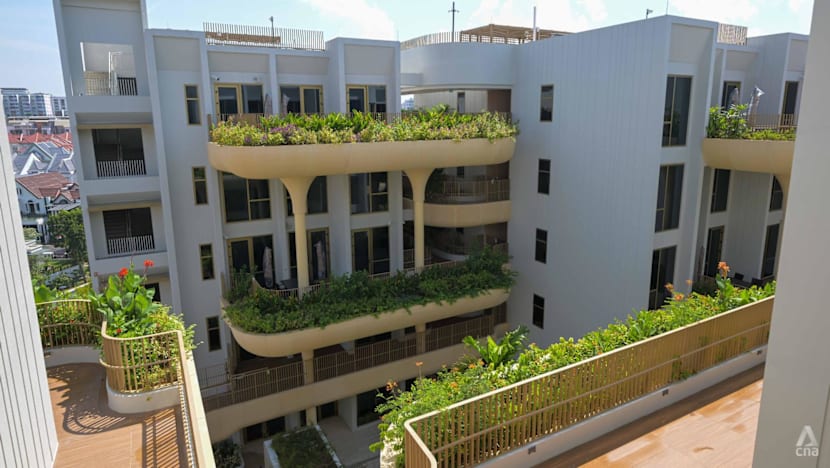
The physical environment signals that positioning immediately. Floor-to-ceiling windows draw natural light into apartments ranging from 302 sq ft to 569 sq ft. Most units include private lift access and kitchenettes. The aesthetic reads as residential rather than institutional — a deliberate design choice, not a cosmetic one.
Beneath that residential surface, however, sits a dense layer of care infrastructure. Fall detection systems, motion-sensor lighting, emergency call points, and vital-sign monitoring devices are embedded throughout. Residents can access a general practitioner, specialist consultants, rehabilitation services, and traditional Chinese medicine treatments without leaving the compound. A hydrotherapy pool, gym, karaoke lounge, mahjong room, and a restaurant offering both buffet and à la carte dining complete the offering. The development also opens directly onto an adjoining 1.5-hectare park with senior-friendly fitness equipment.
The development comprises 200 assisted living apartments and 100 nursing suites. Assisted living packages begin at approximately S$8,000 per month; nursing suite packages start at S$7,600. Final rates vary by unit size, layout, floor level, and orientation. These are not subsidised figures. Perennial Holdings executive chairman and CEO Pua Seck Guan was direct about the market segment being targeted: upper-middle class Singaporeans, because the economics of private land acquisition and development left the company with, in his words, “no choice.”
The care model is structured in tiers. Assisted living residents receive daily check-ins and vital-sign assessments, with nursing, rehabilitation, and medical services layered on according to individual need. Each resident undergoes a comprehensive pre-admission medical assessment and is entitled to two consultations or treatments monthly — spanning Western medicine, TCM, or rehabilitation. As care needs escalate, residents can transition within the same development rather than relocating entirely.
Two dedicated blocks of assisted living apartments, totalling 40 units, are reserved for residents with mild to moderate dementia. Memory care support within those blocks carries an additional fee starting at S$1,200 per month. Nursing suite residents requiring dementia care pay an additional S$1,500 per month. Approximately 30 per cent of nursing suite beds are set aside for severe dementia cases. A therapeutic garden within the compound features heritage buses, a vintage hair salon, telephone booths, and a working post box — spaces designed to stimulate long-term memory and encourage independent movement.
The nursing suites are open for bookings now and are expected to begin operations in the fourth quarter of 2025. The assisted living apartments, the Perennial Wellness centre, and The Olive restaurant are already operational. Perennial Wellness — which includes general practitioners, specialists, an imaging centre, physiotherapy, occupational therapy, speech therapy, and TCM services — is also open to the general public, not only residents.
Close to 30 prospective residents had expressed strong interest ahead of the launch. They include seniors living alone following the death of a spouse, those whose children have emigrated, wheelchair users, individuals managing chronic conditions, and families seeking full-time care for relatives with dementia or Alzheimer’s disease. The profile reflects Perennial’s deliberate targeting strategy. Pua was unambiguous: “If you are very good, independent, don’t come. You better stay home, enjoy your family, enjoy your grandchildren.”
The occupancy trajectory Perennial is projecting draws directly from its China experience. Its eldercare projects on the mainland typically reach around 30 per cent occupancy within the first year and climb to 80 per cent in the second. Pua expects Singapore to follow a broadly similar path, while remaining cautiously optimistic that the smaller scale — 200 assisted living beds versus thousands in China — could allow the development to fill more quickly.
The financial risk is not concealed. Capital has already been deployed. Revenue now depends on whether the concept resonates with a population that owns its homes at unusually high rates and has historically been reluctant to move out of them. “The risk is, if such a concept doesn’t catch on, you cannot generate the income,” Pua said. Singapore’s demographic trajectory — an ageing population with growing care needs and shrinking family caregiving capacity — provides the structural tailwind. Whether Perennial can convert that tailwind into sustained occupancy is a separate, operational question.
Staffing compounds that challenge. Perennial plans to build a workforce of approximately 150, drawing from both the healthcare and hospitality sectors. Staff currently come from Singapore, Malaysia, and the Philippines, supplemented by employees seconded from the company’s China operations. Care staff ratios are set at approximately 1:8 in standard assisted living apartments, tightening to 1:4 in the dementia-dedicated blocks, and ranging from 1:4 to 1:2 in nursing suites with memory care wards depending on acuity. Finding caregivers fluent in the languages and dialects elderly residents are most comfortable speaking — Hokkien, Cantonese, Teochew — is, Pua said, particularly important and particularly difficult in a tight healthcare labour market.
Beyond Singapore, Perennial is positioning Parry Avenue as a demonstration asset for regional expansion. Potential partners from across Southeast Asia have already approached the company, drawn by the prospect of renovating and operating existing facilities rather than bearing the full cost of greenfield development. One prospective partner, whose identity and country Pua declined to disclose, reportedly committed to pursuing a deal after visiting the site. The regional model would be materially less capital-intensive than the Singapore build, which required absorbing the full cost of private land acquisition in one of the world’s most expensive real estate markets.
Over the next four to five years, Pua wants Perennial to be recognised as a global champion in care. He is careful to define that on clinical rather than commercial terms. The metric he returns to is measurable improvement in residents’ health — blood pressure, diabetes management, cholesterol, muscle strength, sleep quality — tracked over three, six, and twelve months. “If after three months, after six months, after one year, their vitals improve, then I think I’m global champion,” he said. Scale alone, he added, is not sufficient: “I’m now global champion only on scale — not good enough.”