
Pritam Singh Disbarred: Analysts Say Raeesah Khan Saga Has Finally Run Its Course

A Five-Year Affair Reaches Its Conclusion
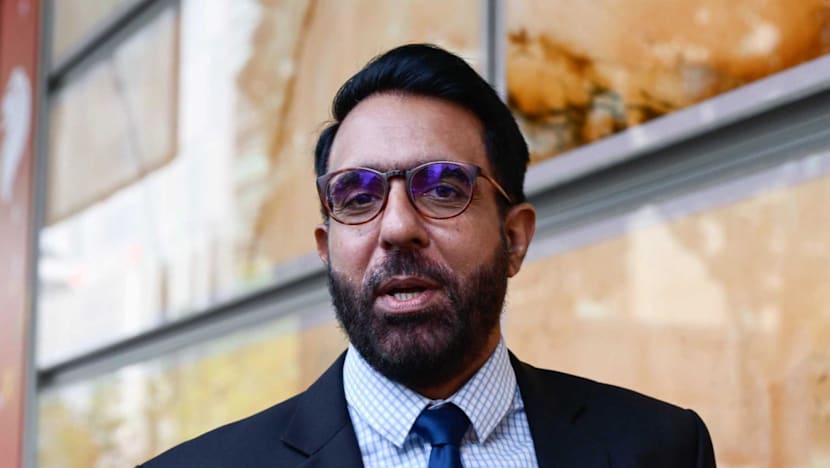
The Law Society of Singapore’s disciplinary tribunal struck Workers’ Party (WP) chief Pritam Singh off the legal rolls on Thursday, 13 August, bringing what analysts describe as the likely final chapter of a political and legal saga that has consumed parliamentary time, judicial resources, and public attention since 2021. Mr Singh, 50, did not contest the application. Political analysts told media that while the disbarment itself was a foregone conclusion, its significance lies in what the entire episode communicates about the standards Singapore holds its public figures to.
The saga began in August 2021, when then-WP Member of Parliament Raeesah Khan told parliament a fabricated anecdote about accompanying a sexual assault survivor to a police station where officers allegedly mishandled the case. She admitted the falsehood to Mr Singh shortly thereafter.
Ms Khan compounded the damage.
She repeated the false account at an October 2021 parliamentary sitting before publicly admitting to lying in November of that year. A Committee of Privileges (COP) was convened to investigate. Mr Singh and other senior WP figures gave evidence in December 2021. A court subsequently found Mr Singh guilty of lying under oath to the COP — specifically, of falsely claiming he had urged Ms Khan to come clean — and fined him S$14,000 (approximately US$10,900). His appeal was dismissed in December 2025.
An Inevitable Outcome
Analysts were unambiguous about the nature of Thursday’s disciplinary hearing. SMU Associate Professor Eugene Tan called it an “open and shut” case. Dr Mustafa Izzuddin, senior international affairs analyst at Solaris Strategies Singapore, described the outcome as “inevitable”, noting that the thresholds for striking a lawyer off the rolls are clearly established in law.
Assistant Professor Benjamin Joshua Ong of the Singapore Management University (SMU) offered a precise explanation for why Mr Singh did not contest the application: “He knew the law, which is that a lawyer who commits dishonesty-related offences will almost invariably be struck off.”
The Law Society was legally obligated to seek disciplinary action following Mr Singh’s conviction on two counts of giving false evidence. There was no procedural ambiguity, no contested facts. The tribunal’s decision followed logically from the conviction.
No Remaining Loose Ends
In July, Leader of the House Indranee Rajah confirmed that a time bar precluded further parliamentary action against WP leaders Sylvia Lim and Faisal Manap, whom the COP had also found to have lied under oath. With that determination made and Thursday’s ruling delivered, Dr Mustafa assessed that there appear to be no remaining “loose ends” requiring institutional resolution.
What the Saga Communicates
Analysts were careful to distinguish between the procedural conclusion and its broader political meaning. Asst Prof Ong framed the five-year affair in terms of principle: “The message is clear that honesty, even in matters that seem small, matters.” He acknowledged, however, that upholding that principle has not been without cost — parliamentary time and court time have been diverted from other pressing issues.
He also noted that Ms Khan’s original falsehood, however wrong, was told in the context of attempting to draw attention to how sexual assault survivors are treated by authorities. That context, he argued, should not be forgotten as the political episode recedes.
Independent political observer Dr Felix Tan offered a more measured read of public sentiment. Many Singaporeans, he said, are “probably ready to move on.” He added a caveat: “There will inevitably be some who see the entire episode as having become unnecessarily politicised or politically charged. Ultimately, much will depend on how the public views the proportionality of the outcome.”
Dr Mustafa was blunter. He identified clear “political fatigue” surrounding the case and stated it was “time for this chapter to be closed, and for other chapters to be opened.”
Political Impact on Singh and the WP
Mr Singh is a non-practising lawyer. His income and day-to-day political work are not directly affected by the disbarment. Analysts broadly agreed that the ruling delivers another reputational blow, but one unlikely to fundamentally alter his standing among supporters.
Assoc Prof Tan put it plainly: “The public has very much decided on him so I don’t see today’s case affecting him in any significant way. To be sure, it is another reputational hit and damaging to his political brand, which he would rather not have.”
For the WP as an institution, the picture is more nuanced. The party retains its position as Singapore’s only credible opposition force, a status that has provided a degree of insulation throughout the saga. Assoc Prof Tan described this as a “silver lining” — the WP’s structural importance to Singapore’s political landscape has cushioned the cumulative impact of a long and damaging episode.
He issued a clear warning nonetheless: “The WP will have to be even more careful not to be involved in another political blunder for this parliamentary term.”
The Question of Reinstatement
Disbarment is not necessarily permanent. Dr Mustafa noted that Mr Singh retains the right to apply for reinstatement to the legal rolls, though the process is demanding. “The procedure can be quite onerous, and the threshold is pretty high, and it takes a significantly longer period of time,” he said.
Asst Prof Ong pointed to a precedent: Glenn Knight, the first head of the Commercial Affairs Department, was struck off the rolls in 1994 following a cheating conviction. He applied for reinstatement in 2007 and returned to legal practice in his early sixties. The path exists. Whether Mr Singh pursues it remains to be seen.