
Pakistan Strikes Afghan Border Targets After Karachi Attack, India Rejects Islamabad’s Allegations

Cross-Border Strikes and a City Under Siege
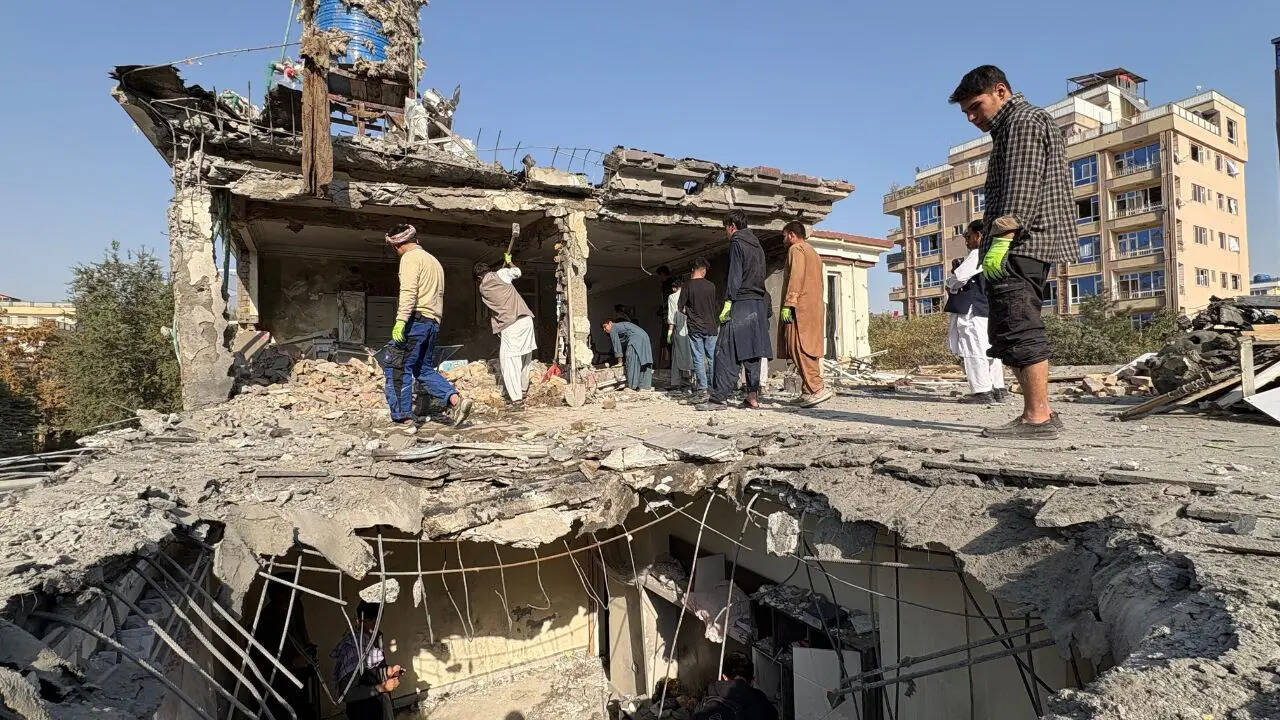
Pakistan launched ground operations and air strikes along the Afghan border in the immediate aftermath of a significant militant assault on Karachi, with Islamabad claiming its forces killed 29 militants in coordinated precision strikes targeting sites inside Afghan territory. The sequence of events — a brazen urban attack followed swiftly by cross-border military action — underscores the accelerating deterioration of relations between Pakistan and the Taliban-governed Afghanistan, and raises pointed questions about the regional security architecture that has long struggled to contain non-state armed groups operating across porous frontiers.
Pakistan’s Minister of Information, Attaullah Tarar, announced the strikes via social media, stating that Islamabad acted in direct response to escalating terror attacks against its security forces. The Afghan government, for its part, issued no official response to Pakistan’s claims — a silence that, given the Taliban administration’s historical posture on cross-border operations, is itself diplomatically significant.
The Targets Named
Tarar specified that Pakistani forces destroyed three targets in the Afghan provinces of Paktia, Paktika, and Kunar, describing the strikes as precision operations. Pakistan has consistently attributed the surge in domestic terrorist violence to the Tehrik-e-Taliban Pakistan (TTP), or Pakistani Taliban — a distinct but ideologically affiliated organisation to the Afghan Taliban that has exploited the post-2021 power transition in Kabul to reconstitute and expand its operational capacity inside Pakistan.
The Karachi Attack: A Compound Stormed, a City Reminded
On Saturday evening, at approximately 8:30 pm, militants stormed the Sindh Rangers’ Bhittai Wing headquarters in Gulistan-e-Jauhar, a densely populated residential and commercial district in Karachi. The assault triggered a firefight lasting nearly 90 minutes, drawing in Special Security Unit (SSU) commandos and Anti-Terrorist Force (ATF) personnel alongside Rangers troops before the situation was brought under control.
Four Pakistani soldiers were killed in the engagement. Six militants were neutralised, and one injured attacker was captured alive. The attack represented the most significant terrorist strike in Karachi since October 2024, and the most symbolically resonant since February 2023, when militants overran the Karachi Police Office on Shahrah-e-Faisal, inflicting multiple casualties and exposing the city’s persistent vulnerability to organised militant operations.
Jamaat-ul-Ahrar, a faction of the proscribed Tehreek-e-Taliban Pakistan, claimed responsibility for the Saturday assault. The group’s willingness to target a paramilitary installation in Pakistan’s largest commercial city — rather than in the more conventionally contested frontier regions — signals an intent to project operational reach and generate maximum psychological impact.
India’s Categorical Rejection
The Karachi attack rapidly acquired a bilateral dimension when Pakistani officials made public allegations implicating India in the incident. New Delhi responded with unambiguous firmness. India’s Official Spokesperson Randhir Jaiswal stated on Sunday that his government had reviewed the Pakistani reports and categorically rejected what he described as “baseless allegations.”
Jaiswal’s statement did not merely deny involvement; it pivoted to a broader indictment of Pakistan’s strategic posture. His words merit quoting in full:
“Instead of pointing fingers at others, Pakistan would do better to look inwards, take credible action against the terror infrastructure on its territory and rid itself of its proclivity to rely on terrorism as an instrument of state policy.”
The formulation — measured, deliberate, and carrying the full weight of official diplomatic language — reflects a posture New Delhi has maintained with increasing consistency: that Pakistan’s internal security failures are products of structural choices, not external interference, and that international credibility on counter-terrorism demands self-examination before accusation.
Structural Context: A Relationship Defined by Accumulated Tensions
The current escalation does not emerge from a vacuum. Several intersecting dynamics have compounded over recent years to produce the conditions for precisely this kind of cascading crisis:
What distinguishes the current moment is the convergence of these pressures: a government in Islamabad under sustained domestic political strain, a military conducting operations on two fronts simultaneously, and a regional diplomatic environment offering few off-ramps.
What Comes Next
Afghanistan’s silence in response to Pakistan’s strike announcements will not hold indefinitely. When the Taliban administration does respond — whether through formal diplomatic protest, retaliatory rhetoric, or the more oblique channel of increased TTP operational latitude — the nature of that response will reveal the true state of a relationship that Islamabad once believed it could manage through strategic depth and now finds it cannot.
For Karachi, the immediate question is operational: whether the capture of the injured attacker yields actionable intelligence capable of disrupting the cell structures that planned and executed Saturday’s assault. For Pakistan’s broader security establishment, the more uncomfortable question is strategic — whether cross-border strikes represent a sustainable deterrent posture or simply a visible, politically necessary response to a problem whose roots lie deeper than any border.
The answers, in all likelihood, will not arrive quickly.